Thursday, April 11, 2019

Mini's Top 10 (Factually) Greatest Games of All-Time

Everybody likes top 10 lists. You like 'em. I like 'em. We just can't resist the urge to sequentially number random things. But only I've got the super special list; the factual, scientifically tested, FDA approved list. Using my fine-tuned methodology, I was able to definitively prove with precision measurement just what video games provide the highest objective entertainment value for your buck.

I won't get too much into the details of it, but the experiment involves tying the test subjects to a chair and screaming in their face until they repeat back the results I like. Occasionally blunt instruments may have been utilized to control for certain... variables. Out of ten thousand test subjects, the data came back with unanimous consensus. 100% of participants agreed that this top 10 list is indeed the most accurate and correct list for the Greatest Games of All-Time and Outside of Space-Time. Just in case you happen to find yourself being sucked through a black hole to a timeless, empty, dimensionless void, you can be confident that this list still remains true even while you're there.

So without further ado, here are Mini's Top 10 (Factually) Greatest Games of All-Time:

#10. Zone of the Enders: The Second Runner - MARS (PC, 2003-2018)


Most people know the name Hideo Kojima from his work on the Metal Gear series. He's a game director that has made himself famous for extravagant over-the-top plots and hour-long cutscenes. While I do appreciate the Metal Gear series myself, unfortunately I think that franchise as a whole has suffered from wildly varying quality control. The first game could be considered groundbreaking for pushing the envelope on cinematic storytelling in video games, but its graphics and gameplay haven't aged particularly well, and its numerous sequels all seem to take trade-offs and sacrifices for every step forward they make.

For Zone of the Enders: The Second Runner on the other hand, the game is a massive improvement over its predecessor in almost every way, and it has never seemed to get the acknowledgement it deserves for being quite possibly the greatest mech game ever made. It's faster, leaner, prettier, and just a damn good time.

While it is a fairly short game, it also is almost entirely devoid of filler, with each advancement in the plot revealing something interesting and substantial about its characters or lore. Although the story itself isn't nearly as convoluted or original as Metal Gear's, it makes up for this by just being tightly-paced and sufficiently detailed enough to stay invested in. Kojima still does have his fun with bombastic storytelling and dramatic character interactions, but without all the bloat of multi-layered government conspiracies, clones, and artificial intelligence pulling all the strings behind the scenes. It's just Dingo and his orbital frame; smack-talking to everyone he comes into contact with for funsies.

The real star of ZOE2 though is not its story but its gameplay. It so perfectly captures the speed and exhilaration of intense fight scenes that you would see out of action anime, and does so without the controls feeling loose, clunky, or too unruly to handle. Though it is an unorthodox control scheme, once you get used to it, controlling Jehuty is a breeze. I'm actually rather surprised that there hasn't been a Dragon Ball Z game that has adopted a similar system since, as it would be an excellent fit for the franchise. But Zone of the Enders really is one of a kind, and there's nothing else that has been able to so effortlessly combine frenetic action with concise and dramatic storytelling since.

It also goes without saying that this game was absolutely gorgeous upon release. Its semi-cel shaded aesthetic helped it age phenomenally, and it's only gotten better with two HD remasters over the years. That's why I recommend the MARS edition of the game, which includes the latest 4K textures and 5.1 remastered audio.

#9. Mario Kart 8 Deluxe (Switch, 2014-2017)


Wait, what the hell is this? A racing game on MY top 10 list? What a JOKE. That's like putting Madden or FIFA in there. WHO DOES THAT? There must be some sort of mistake. Let me double-check my notes... Oh nope, it's got Mario in the title, so it checks out.

Your surprise is as big as mine. I can't be bothered to care about anything even vaguely sports-related; racing games included. That's why Mario Kart 8 blew my mind in 2014 when I was suddenly enamored by its stellar presentation, content, and controls.

While seemingly just another racing game like any other when you first pick up and play, it's all the little details in this package that manage to keep elevating it ever so slightly with each passing return. The crazy anti-gravity tracks, the colorful visuals, Luigi's death stare, vehicle customization, the extreme diversity of environments, the slick elegance of pulling off a long drift followed by a speed boost; everything it does is executed with such fluidity and grace. It's like licking your ice cream cone in slow-motion.

Mario Kart 8 embodies the greatest of "easy to pick up, difficult to master" games. With each increasing difficulty, you need to get a handle on a new aspect of the gameplay in order to succeed. Anyone can breeze through starting out on 50cc, but by 100cc you'll want to get a good grasp on the layout of the tracks and when to use various items. At 150cc, you'll need to have mastered drifting around corners in order to survive the sharp turns, and by 200cc, you will need to bring all your cards to the table and master braking while drifting at just the right moments to stay on the track, or you can't hope to 3-star every Grand Prix. The gradual ramping up of difficulty naturally forced me to learn new techniques without being too overwhelming at first, which made the experience incredibly satisfying; constantly driving me to come back for more.

Mario Kart 8 is also one of the few online experiences that Nintendo mostly gets right. I very rarely experience lag or the general jank that often comes with poor online connectivity.

The game originally launched for Wii U, but it was later ported to Switch in the form of the deluxe edition, which includes all previous DLC as well as a completely overhauled battle mode; making it the recommended way to play. My only real gripe with the Switch release is the inclusion of "smart steering", which is enabled by default and hidden away in obscure menus in order to disable it. I don't have a problem with making the game more accessible, but smart steering's aggressive implementation is overreaching and unnecessary.

As someone who isn't really qualified to make this assessment, Mario Kart 8 is the greatest racing game ever made. Luckily, I'm scientifically backed by my rigorous study of ten thousand captives volunteers, so I'm confident in making this claim anyway. Mario Kart 8 did the impossible. It didn't just make me care about a racing game; it made me fall in love with it. And for that, it deserves a spot on this list.

#8. The Legend of Zelda: Twilight Princess HD (Wii U, 2006-2015)


Of course we have to have a Zelda title, so here we are. I know what you're thinking though. Twilight Princess? Really? What about Ocarina of Time, A Link to the Past, or every hipster's favorite choice, Majora's Mask? Well look, I have mad respect for these games. I've wasted countless hours getting lost in Ocarina of Time myself, but I think Twilight Princess doesn't get enough credit largely due to its place in time. It really doesn't do a whole lot new or different with the Zelda formula, yet had it came out in place of Ocarina of Time, it would have been heralded as a masterpiece just the same.

Ocarina of Time was both my first experience with the Zelda franchise and my previous favorite, but as much as I view it to be an iconic classic as well, I have to be honest and say that I found the latter dungeons in the Adult Link half to become a bit of a slog at times. As the game progressed, it became less interested in contextualizing why you're wandering around all these spike-and-lava-filled corridors and felt a little mechanical after a while. Just free the sage from the next dungeon you need to plunder, and that's roughly the full extent of your motivation for moving forward. In essence, Ocarina of Time starts out strong but slowly loses steam, whereas Twilight Princess in contrast does the reverse; starting out rather dull but gradually building into a crescendo, finally culminating in a spectacular four-phase showdown against Ganondorf. It makes for a more satisfying story progression.

Once you finally don your Hero's Tunic, the game offers a great variety of dungeons and set pieces while placing a larger emphasis on story to provide greater motivation for what you're doing. The combat is enhanced by various optional sword techniques that you can acquire, the boss battles have an epic sense of scale, and its half-anime, half-realism aesthetic is a unique blend that works really well for it. Midna is not just a superior assistant to Navi; she is Best Assistant. Of all-time. Ever. There will never be a better assistant in a Zelda game. Also you just start out as Adult Link this time with no jumping through hoops.

Nowadays the ideal way to play this game is via the remastered Wii U version for the enhanced visuals, but you can't go wrong with the original GameCube release either. Just avoid the Wii version for the shoehorned motion controls.

If you think about it, Twilight Princess is everything great about Ocarina of Time but with extra polish. It has more story, more content, a smoother framerate, and more refined mechanics. The problem is if you already played a previous 3D Zelda, it might feel all too familiar, so it's easy to overlook. But for me, this isn't reason enough to dismiss it. Sometimes doing things the same but just better is good enough, especially when your foundation is built on a masterpiece. So in the end, I'm gonna out-hipster the hipsters here and go with Twilight Princess. Sorry Majora's Mask fans. But let's keep it real, you can't go wrong with any Zelda really.

Shut up Skyward Sword. I wasn't talking about you.

#7. Super Mario 64 (Nintendo 64, 1996)


Mario is quite possibly the most iconic video game character of all-time; single-handedly being responsible for reviving the industry after the video game crash of the 1980s. So far-reaching is his indomitable might that it's no wonder there are not just one, but two titles starring the Italian plumber on this list.

Out of all the Mario titles over the decades, Super Mario 64 stands out the most notable to me; not just for being the first 3D Mario experience, but for managing to be so memorable and engaging that it still remains his best adventure. There's just something magical about the entire experience, from its infectious soundtrack to the simple pleasures of exploring Peach's castle. I was always eager to see what mysteries lie behind the next locked door or hidden passageway.

The victory fanfare followed by a "Here we gooo!" after acquiring a new star always gets you pumped so that you want to jump right back into the level and hunt for more. Swimming through the tranquil waters of Jolly Roger Bay while being entranced by its hypnotic tunes is a sublime trip. Spinning Bowser around until you finally toss him to the wind with a "So long-a Bowser!" puts a big dumb grin on your face. There are so many special moments this game creates that no other Mario title has managed to replicate since.

Mario 64 radically changed the gameplay from the traditional sidescrollers by opting for a hub world with nonlinear gameplay. Nintendo could have easily just stuck to the usual Mario formula but in 3D, yet despite being in deeply unfamiliar territory, they went above and beyond the call anyway and completely reinvented the plumber as we know him. It was impressive enough how ground-breaking this game was for the Mario franchise, but on top of this, it ended up defining an entire genre of collectathon adventure games that would emulate this formula for a decade.

It cannot be overstated how much of an impact this game left on the industry. Sure, there were 3D games that came before it, but Mario 64 fully realized the potential of the medium by crafting a world and mechanics that can only work as well as they do in a 3D space. More than any other game throughout the industry's entire history, Mario 64 felt like the biggest leap in next-generation entertainment; ushering in a new era where the baseline for a AAA experience must be in 3D.

#6. Super Smash Bros. Brawl (Wii, 2008)


First I went with Twilight Princess as Best Zelda, and now I'm going with Brawl as Best Smash. Look, I can't help it folks, it's just science OK? I had to go through a lot of blunt instruments to get to the truth on this one, and this is the result we got, so DEAL WITH IT.

It's hard to talk about the virtues of Brawl without first addressing its controversial legacy. Coming off the heels of the massively popular and highly competitive Super Smash Bros. Melee, for many Brawl was seen as a disappointment upon its launch. Director Masahiro Sakurai doubled down on his insistence that Smash at its core is a party game, not a hyper-competitive fighter. This led to some design choices that left Melee fans out in the cold. For my two cents on the matter, I prefer something a little more in-between, but Brawl still ended up working very well for me.

Brawl reduced the overall speed of combat, making it feel more in line with the N64 original. On top of this, it introduced the infamous tripping mechanic, which would cause your character to fall over and interrupt movement entirely at random. While I can't deny that tripping was just a bad design choice no matter how you look at it, what I can say is that it was still mostly inconsequential, and the derision leveled against it is largely overblown. In fact, I can't think of a single instance where tripping actually caused me to lose a match. With only a 1% chance of triggering upon a dash, you could often go several matches without experiencing a single trip, and even if you did, the chances were even more rare that you ended up severely punished for it.

Brawl's slower combat speed tends to get a bad wrap too, but something I always thought was missing from Melee was the sense of impact from landing a good hit. In the first Smash Bros game, you felt the crunch when you got slammed by a well-timed smash attack or a fully-charged special. With Melee on the other hand, there was very little weight behind most attacks. In a way, this was necessary in order for Melee to maintain its faster speed, but it also deflated a sense of satisfaction from each individual hit. Brawl's return to a slower style of combat brought back some of that feeling of weight behind a good punch.

Of course, now with the further refined mechanics in Smash Ultimate, Sakurai has found ways to bring back the smash in Smash without sacrificing speed, so we get the best of both worlds, but Brawl still barely inches out the latest entry for one reason: content. I've never been big on fighting games, and one of the major reasons for that is due to a lack of varied content. Most settle for slightly different dress-ups of the same old versus mode in order to diversify themselves, but it's not enough to escape the feeling of repetition. This is especially exacerbated by the fact that most stages in fighting games don't actually impact the gameplay at all and merely serve as visual backdrops. This is not the case when it comes to Smash.


In stark contrast to other fighting games, the Smash Bros series makes movement a lot less restrictive and more free-flowing, giving players the ability to more easily traverse uneven ground and elaborate layouts. This allows each stage to bring something different to the table with hazards, power-ups, and varied terrain. Then you've got an assortment of other fun bonus modes like Break the Targets and Home-run Contest. But what makes Brawl truly go even further beyond any other Smash Bros is its ambitious Subspace Emissary mode.

Subspace Emissary is a massive sprawling campaign mode that turns the game into a sidescrolling adventure featuring every iconic Nintendo character. Players journey through lengthy stages full of obstacles, enemies, and boss battles; all neatly woven together with numerous cutscenes showcasing the characters' bombastic interactions with each other. To date, I can't think of any other fighting game that has attempted a story mode on this scale and made it work as well as it does in Brawl.

Another reason the Smash series just stands out in general is its unique accessibility over other fighting games. By stripping away the need to pause the game and memorize intricate button combos for each character, Smash Bros is infinitely easier to jump right into with any new character and instantly gain a decent grasp of their move set. There's really no end to the praises I can sing for this series and how much it breaks genre conventions to great success.

Brawl in particular has been around the block for so long that numerous mods have been made for it. Recently my ideal choice for experiencing it is with Balanced Brawl mod in Dolphin emulator. Balanced Brawl fixes what little gripes I had with the game, removing the tripping mechanic and lightly tweaking the characters to make everyone more well-rounded and competitive. And with crisp 1080p 60 FPS graphics in Dolphin, I'm still able to get a lot of extra mileage out of it. Though if you don't have a capable PC, Balanced Brawl is still fully playable on Wii with a SD card and original copy of the game.

#5. StarCraft: Brood War (PC, 1998)


This game was so effective with its execution that it made the entire rest of the genre irrelevant for me. Command & Conquer? Meh. Age of Empires? Yawn. What's Warhammer 40K again? Oh well. Why bother when we've already achieved the pinnacle of Real-Time Strategy? Blizzard spoiled me so much with this game that afterward I struggled to latch onto any RTS not produced by them. Any time I would attempt to try something else, I would just think, "I'd rather be playing StarCraft right now."

StarCraft is the game that birthed modern eSports and turned playing video games into a career. Thanks to its polished gameplay and South Korea's mad obsession with it, StarCraft will forever go down as a legend in the video game industry.

The special sauce that makes StarCraft what it is can be attributed to a number of ingredients. Chiefly among them is the distinct designs of the three playable races in the game. Each plays radically different, yet all can hold their own and turn into a force to be reckoned with once you master their ins and outs. It's a delicate balance to maintain, but the payoff is a lot of added replay value as you could experiment with so many different styles of play. A moody soundtrack and unique interface design also accompanies each race to add to their distinct feel.

Then there's StarCraft's campaign, which features complete story arcs for all three races and is chock full of memorable characters, political backstabbings, and also surprisingly, a great sense of atmosphere. There are haunting scenes of marines bearing down in the trenches; giving it all they have until they realize they're out of ammo and there's nothing left to save them from the encroaching swarm of Zerg. A great sense of melancholy can be felt throughout your journey with the Protoss, as the proud and ancient race must continually make one heartbreaking sacrifice after another in order to secure their future. Lots of great moments permeate the experience on top of delivering exceptional RTS gameplay.

And finally, StarCraft offers the robust Campaign Editor, which includes many of the same tools used by the developers to craft the game's level designs. So versatile is its capabilities that users could create levels that entirely change the genre of StarCraft, from RPG to capture the flag and tower defense. With the inclusion of the editor, StarCraft's replay value is seemingly infinite, as even when you grow bored of the core RTS experience, players can always be creating something new to explore. More than any other tool that Blizzard has released for their games, I find StarCraft's Campaign Editor to strike the best balance between accessibility and complexity.

Thanks to remaster work done on the game, it has now also recently earned the distinction of being able to run on a toaster and in 4K at the same time. The remastered version of the game now retails for $15, which is pretty much a steal for one of the greatest game experiences of all-time. Or you can just literally steal the base game because Blizzard now offers it for free, you cheapskates.

#4. Final Fantasy VII (PC, 1997-1998)
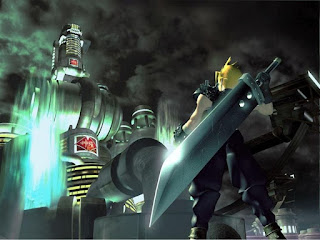

Now we're really getting into the hard choices where I had to make some tough compromises. I knew at least one JRPG had to make this list, but I didn't have room for any more, so this came down to a fierce battle between Chrono Trigger and Final Fantasy VII. Either one of these games is easily deserving to be here, but in the end I decided it's more satisfying to stuff it to all of FF7's trendy critics who love to remind us how overrated this game is, and [insert FF# here] is really the best one. No. Fuck you. Final Fantasy VII is the best. Now GET OUT.

Nah but seriously, Chrono Trigger is a wonderfully-crafted game. However Final Fantasy VII arguably offers everything that Chrono Trigger has and more, even if its execution is occasionally sloppier in doing so. You've got the classic turn-based battle system, a colorful cast of characters, a god-tier soundtrack that will forever be immortalized in your soul, and a sweeping epic story to save the world from a once-venerable hero who tragically turned coo-coo for Jenova Puffs. Or something like that.

But what really sets this game apart for me is that Final Fantasy VII marked the first time in my experience with the medium that truly crystallized video games as an art form. Nothing quite rivals the feels train that this game brings right from the moment that it pulls up to its first stop in Midgar. FF7 doesn't just settle for a cast of likable characters that you can get invested in. So much of its story actually speaks to the human condition and touches on real life issues that are still resonant today. Mega-corporations exploiting the world's natural resources, the high cost of war, mental health, the morally blurred lines between vigilantism and terrorism, the fragility of human life, moving on when your greatest hopes and dreams have been crushed; FF7 touches on a number of themes, and it does so in such a way that feels so genuine in the moment.

Amidst all the JRPG jargon of mako reactors, materia, and Jenova cells, there are numerous small human moments that help keep the story grounded and give this game so much character. When you learn what Shinra did to Barrett's hometown and his best friend, suddenly his rants against the system don't sound so much like the ravings of a wannabe hero who maybe let his idealism get carried away, but instead they reveal a deeply troubled soul whose rage is all too real.

At first glance, Cid just seems like a crotchety old man who treats his assistant like garbage, yet when you learn of how close he came to realizing his childhood dream of becoming an astronaut, and how a last-minute complication shuttered the space program, it's a tragic moment that sheds a completely different light on his character. It doesn't excuse his behavior of course, but it does let you understand him.

The brilliance of FF7's narrative is not just in the dialogue, but the visuals as well. While so many JRPGs tend to opt for bright colors and clean aesthetics, FF7 is decidedly dirtier and feels more lived in. It gives a sense that every place has a rich history behind it often without any direct exposition needed. Before you even set foot in Cid's house, it's quite apparent that his rocket has seen better days. It towers over the town in a dilapidated state, crooked at a slight angle from its failed launch and covered in moss from years of neglect. Incidentally, this is also a great metaphor for the current state of America's space program...


20-year-old spoiler warning, but just in case you didn't know by now, Sephiroth kills Dumbledore. Erhmm, Aeris that is. Aeris. Not to be confused with "Aerith", which is also a lie. Anyway, it's a pretty sad moment. You might have heard of it. It's kinda one of the most iconic depictions in gaming. Not only because of the shocking imagery, but because of the way it was built up to in the narrative. Up until this point, we were led to believe that Aeris was an integral member of the party. She was shaping up to be the main love interest of Cloud, and there had already been several heartfelt and cute moments shared with her that ensured the plot armor was laid on thick. And yet, death still came for her. It's a powerful scene, and the permanence of it makes it all the more potent.

I could go on about the richness of FF7's story, but now let's talk gameplay. Fundamentally, the game's combat isn't all that different from your typical JRPG. It's standard turn-based fare, but it's in the presentation of it that jacks the fun factor up to 11. The flashy limit break attacks combined with the epic god-like summons make it a spectacle to behold on-screen, with one particular summon clocking in at almost a minute and a half of dunking on the enemy with thousands of damage.

The other reason FF7's gameplay stands out to me is in its constant willingness to experiment with various mini-game activities, all the while seamlessly weaving the story into each one. Admittedly, not all of these mini-games work as smoothly as they should, but they help break up the monotony of standard RPG gameplay nonetheless, and when it is at its best, you have Cloud running around town getting into all sorts of silly antics in order to cross-dress as a girl and sneak into a brothel to rescue Tifa.

Final Fantasy VII's only major fault is that its character models look like ass, even by 1997 standards. That's why I recommend the PC version with mods as the best way to play, so you don't have to stare at those laughable brick hands all day. What I don't recommend is waiting for the remake, as the Square of today is not the same company it was 20 years ago, so not only will you probably be waiting another 20 years before it comes out, but most likely many fun quirks about the original will be lost in translation.

#3. Half-Life 2 (PC, 2004)


Ironically enough, around the time of this game's launch, I was mega-hyped for an entirely different first person shooter releasing within the same month. That game was Halo 2. Half-Life 2 wasn't even on my radar, as I never played the first game, and the idea of the protagonist being an unassuming silent nerd running around with a crowbar in a weird orange lab suit gave me an initial gut reaction that this game just seemed too bonkers for me.

On the other hand, the E3 tech demo they showcased was quite impressive from a technical perspective. I never thought such realistic physics were possible in video games up until this point. Half-Life 2 was one of the earliest games to make use of Havok physics, which gave us the first glimpses of what truly life-like interactions could look like in a video game. Yet as technically impressive as it was, the material wasn't presented in a particularly engaging manner beyond "Look what our engine can do!" so it failed to grab me beyond that.

Meanwhile, that E3 demonstration of Halo 2 was completely jaw-dropping. It was full of spectacle, the graphics were an astonishing bump up from the first game despite running on the same hardware, and the booming Marty O'Donnell score made you feel like it was a Hollywood movie coming to life. To this day, I'm not sure I've ever been as hyped for a game as I was for Halo 2.

Then the game came out. I invited my best friend over and it took us just two days to blast through the campaign in co-op mode. While it was a very fun time, there was definitely a lingering feeling afterward that Halo 2 didn't deliver on what was billed to us at E3. The graphics were significantly scaled back, ugly texture pop-in was rampant, and much of the cinematic atmosphere of the demo was only sparsely found in the final product. In fact, its cliffhanger ending was hardly the worst of its offenses if you ask me. I felt lied to.

Fast forward roughly a year later. I caught a glimpse of my brother playing Half-Life 2 on his PC, and I was impressed by the battle that I watched unfold over City 17. It was giving me those same cinematic vibes I once had while watching that demo of Halo 2 way back when, except this time it's actually playable. Right in front of me. And what was up with that giant Combine tower stretching so far into the sky that it went above the clouds? The game had a way of creating a sense of mystery and intrigue through imagery alone, which made me all the more enticed to finally sit down and give this game a try.

It didn't take long after Barney handed me my first crowbar that I became completely sucked into this game and its world. Half-Life 2 has such a grounded sense of realism and grit to it amidst an otherwise heavy sci-fi backdrop. Despite its very linear design, the game is a masterclass in making you feel like you are only a very small part of a much bigger world. Time has already been marching onward for City 17's citizens long before you arrive, and everyone is going about their own daily routines. You'll just wander into a building and witness Combine security raiding apartments; terrorizing citizens without the slightest consideration or acknowledgement of who you are. This kind of world-building was extremely effective at pulling me in.

In contrast to many first person shooters which rely almost exclusively on action to carry themselves, Half-Life 2 excels at both pacing and variety in gameplay. The physics interactions aren't just a gimmick; they are core mechanics of the game, and many puzzles revolve around them. Just when you might start to get bored of blasting away headcrabs and Combine soldiers, the game seems to know right when to shake things up with a vehicle section, puzzle, narrative segment, or a little bit of scavenging and exploration. Combined altogether with some fantastic action set pieces along the way, and you have a recipe for the greatest FPS campaign ever made, even almost 15 years after its release. Half-Life 2 is truly in a league of its own.

#2. Mass Effect 2 (PC, 2010)


It's funny sometimes how such an odd set of circumstances can wind up introducing you to one of your all-time favorites. In the months leading up to Mass Effect's launch, Sci-fi channel (now known as "Syfy") ran a promotional contest to win a free copy of the Collector's Edition. I entered purely with the intent to sell it on Ebay if I even won it at all, as I was struggling to find ways to make money at the time, and initial impressions of the game just didn't grab me.

Astonishingly, the game actually showed up at my doorstep a few weeks later, neatly packaged and ready to play. With the game now placed right in front of me, and knowing that I had an amazing time with the last BioWare game I played (Knights of the Old Republic), I decided that I would at least pop the game into my Xbox once and give it a chance before I turn it over to someone else. What followed was a near-instant reversal of my previous decision to sell the game.

Mass Effect's introductory sequence knew exactly how to hook me in. It wastes no time establishing some intriguing world-building, like how humans are only newcomers to galactic civilization and don't hold any real power or respect. The story steadily drip-feeds you more information about galactic history, an ancient civilization called the Protheans, and how it all connects back to events unfolding now, and it's all done in such a way that, like Half-Life 2, makes its universe feel so much bigger than you, and encourages you to want to explore as much of it as you can.

When all was said and done, Mass Effect really showcased what a great Star Trek game could look like (despite not actually being Star Trek). But it did have some problems. Numerous side missions were terrible at recycling assets, the framerate was erratic, inventory management got cumbersome, and combat could feel rather clunky at times.

Pretty much all of these issues were addressed in its sequel, Mass Effect 2. Combat feels a lot more fast-paced and fluid, the repetitive side missions were replaced with largely more substantive content, and the inventory system was... well, removed. Not the ideal choice, but still an improvement I suppose.

Mass Effect 2 did have to give and take in a few areas in order to make itself into a leaner game. Much of the intricate galactic politics and alien squabbling that went on in the first game isn't as prevalent here. However, while Mass Effect 1 did give a nicer overview of the universe that BioWare had crafted, the second game does flesh out the seedier underbelly of the galaxy just as well in its own right. With Commander Shepard now reluctantly working for a shady organization called Cerberus, you will frequently find yourself taken to some of the more disreputable and lawless regions of space, and the game does a great job of building an atmosphere around that, with many alien interactions involving ulterior motives and questionable agendas that you have to contend with.

OK so there's a lot of sci-fi and a lot of pew-pew in these games; that's par for the course. But that obviously isn't reason enough for Mass Effect 2 to score so high on this list. What really sets this game apart is in the story of your crew. Or rather, the story that you make of them.


With human colonies being mysteriously abducted by a race called the Collectors and taken to an unknown system beyond the Omega 4 Relay, Shepard is in charge of investigating the reason behind these abductions and putting an end to them. There's just one big problem. Nobody who has attempted to enter the Omega 4 Relay has ever returned in its many years of existence, so you're going to need a crew of some of the best in the galaxy to be prepared for whatever you might encounter on the other side.

This formulates the basis of Mass Effect 2's mission design, as one assignment after another will have you scouring the galaxy to assemble your team. Each time you pick up a new recruit, tons of new dialogue possibilities open up, along with an optional loyalty mission to earn your crew's respect and trust. These loyalty missions are frequently just as fun as the recruitment missions themselves, as you learn much more behind each character's backstory and really get to build a bond with your crew.

This all leads up to the game's explosive tension-filled finale. Aptly dubbed the "Suicide Mission", going beyond the Omega 4 Relay is quite possibly the most epic climax I've ever experienced in a video game. Up until this point, there have been numerous choices you could have made throughout the story to influence the loyalty of your crew and upgrade your ship's technology so that everyone and everything is at the best of their ability. Anything less than that, and it can mean the difference between everyone surviving the mission or no one. When I first played this mission, I wasn't even aware of how many of my crew could possibly die or not, and to what degrees I might be able to influence the outcome, so when I saw my first crewman drop dead, I got paranoid.

Fuck no am I losing Garrus. Mordin and Tali better not kick the bucket either. I started intentionally assigning characters I deemed of lesser importance to more critical roles where I thought they would be at greater risk of dying. This was in order to protect the characters that I couldn't accept losing, but even then, it was still hard to stomach. I had never been put in a place like this before while playing a video game. Mass Effect 2 actually made me feel the weight of my decisions.

Everything culminates in a Lovecraftian nightmare plot twist that reveals a disturbing fact about the enemy, followed by a fierce boss battle against said nightmare. The whole mission is just an insane adrenaline rush of shocking imagery, explosive action, and desperate maneuvers from your crew. Seeing it all unfold with your choices affecting the outcomes is an impressive feat of engineering from BioWare, and I've never seen anything like it since.

With EA slowly increasing its chokehold on its developers over the years, the stars must have aligned for some kind of miracle in order for this game come out the way it did under the circumstances.

#1. Battleborn (PC, 2016)


Battleborn is: FPS; hobby-grade coop campaign; genre-blended, multi-mode competitive e-sports; meta-growth, choice + epic Battleborn Heroes!

#1. Super Metroid (SNES, 1994)


Most people probably think when choosing a number one you should carefully consider a multitude of different factors. Level design, mechanics, graphics, soundtrack, etc. The truth is that's all way overthinking it.

All you need to do in order to be taken seriously as a critic and solidify your great taste is to just pick something old. That's why every film critic worth their pedigree knows to pick Citizen Kane as their number one. It instantly validates your pretentiousness along with some other pretty rad benefits. An impeccable mustache and monocle will suddenly materialize upon your face, and you will ascend to an enlightened state where all criticisms are drowned out by the sound of your sipping tea and munching on crumpets.

So of course how could I choose anything other than the mother of all metroidvanias itself? Now you can't tell me Twilight Princess and Brawl aren't the best of their respective franchises. I've got pretentious immunity, bitches!

But it just so conveniently happens that Super Metroid is also great at all of those other unnecessary things I mentioned. Indeed, it feels like every pixel of this game was perfectly laid out; every sound carefully crafted to elicit a certain gratifying feeling out of you. Super Metroid is a game far ahead of its time. When the trend was for games to be bright, colorful, and largely linear affairs, Metroid was a considerably darker open-ended experience. It was an immensely atmospheric game before atmosphere was even a thing in games.

There is plenty of quality to be found in the Metroid series as a whole, but Super Metroid stands head and shoulders above the rest by not only setting the standard for all future metroidvanias to come, but still maintaining its supremacy to this day. While its earlier incarnations felt more like prototypes that had to be viewed through the lens of their time period, Super Metroid requires no such contextualization to appreciate. As a proper nonlinear game, it is neither as frustratingly vague as its predecessors, nor as overly telegraphed as its successors. It gives you just the right amount of tools and clues to figure out where to go next without spelling it out for you. When you discover something new, it is your discovery, which makes for a very satisfying feeling of exploration and progression.

Super Metroid was a game that I could spend countless hours getting lost in during my childhood. Exploring the depths of planet Zebes to uncover whatever secrets I could find was endlessly rewarding, and uncovering hidden power-ups that continuously enhance Samus' power suit kept me coming back for more. Even when there isn't necessarily a treasure waiting around the corner for you, just the simple act of traversing its world and taking in the scenery is engaging enough. With very little dialogue to be found in the game, it often tells a story through careful attention to detail in the visuals alone. And unlike many modern open world games, nothing about it feels like filler. Every area is meticulously designed to bring a new experience.

As a game driven heavily by visuals and atmosphere, it's difficult to express in words exactly what makes Super Metroid so special. All of it just comes together in a package that is greater than the sum of its parts, and it completely immerses you into its world. It's the game that turned my hobby into a passion, and has inspired countless developers. Super Metroid isn't just held up by nostalgia. It's incredibly polished, and will continue to stand the test of time for decades to come.

What are your favorite games of all-time? Let me know in the comments so I can correct you with science.

Tuesday, December 18, 2018

The Lost Art of the Goku Effect

I submit to you a controversial statement: Vanilla Diablo 3 on PS3 is secretly the best version of the game. Now, you might be thinking how the hell is the version with the crappiest graphics and least amount of content the best way to play Diablo 3? Wasn't Reaper of Souls supposed to be the savior that fixed all of its problems anyway? Well in order to make my case, first we need to take a long walk down Snake Way and talk a little about Dragon Ball Z.

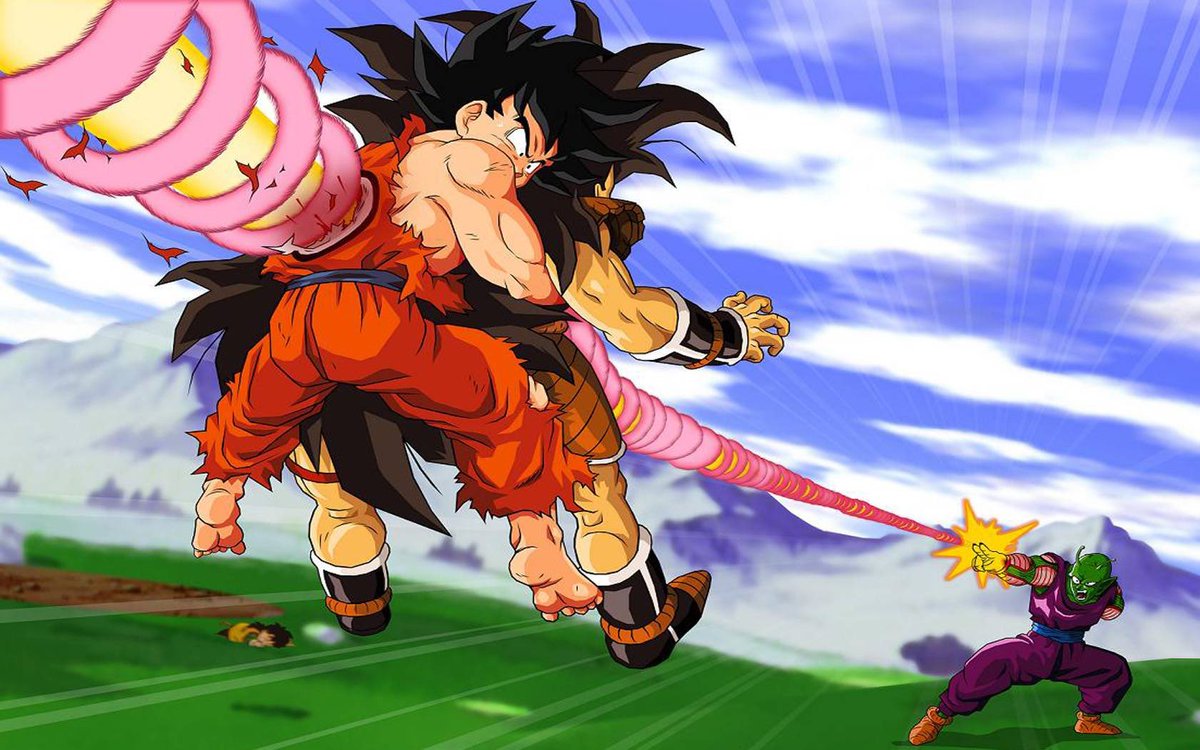
So what does Dragon Ball Z have to do with any of this? Well ya see, a big part of Dragon Ball Z's appeal is seeing Goku's evolution as a fighter over time. When he begins his journey on planet Earth, he can barely even take on a low-rank scrub warrior like Raditz without forcing himself to team up with his arch nemesis, Piccolo. And even then he still has to sacrifice himself just so Piccolo could take the final shot. Despite being one of the most powerful martial artists the planet had ever known, Goku was still just an insignificant peon compared to the numerous other dangerous alien races lurking among the cosmos. He needed to get stronger. And fast, as even more powerful Saiyan warriors that were leagues above Raditz were on their way to Earth following his demise.


It's these massive differences in power scales that made the experience all the more satisfying to watch when you would see Goku reach new heights and take on an even bigger baddie. He was constantly breaking new barriers and achieving things no one else could even imagine. Over time, Goku eventually went from being wrecked by his low-class brother, to taking on the most powerful tyrants in the universe with planet-destroying magnitudes of power. He was a giant among men. It was awe-inspiring to watch.

To tie this all back to video games, my first experience with the RPG genre was Chrono Trigger for the SNES. One of the most striking things I noted about the game after getting a taste of it was the fact that the gameplay was so heavily driven by stats and numbers. Not only that, but you could go back to revisit previously-explored areas and fight old enemies that you have long since surpassed in level. The game even encouraged this after you beat it, as this would unlock New Game+ mode, where players could take their existing characters with all their experience and equipment, but start over at the beginning of the game with them.

Sure, going back to slay small-fry didn't provide any tangible rewards or a steep challenge, but it was just a cool novelty. It would remind you of how far you've come, and what you've already achieved. You felt empowered because of it. To be honest, it wasn't even the act of slaying these poor creatures with a single effortless blow that made it fun. It was merely the thought that I could do it if I wanted to; that such differences in strength are allowed to exist in the game. This is what makes the prospect of leveling up so exciting; to see how far your characters can push the limits and rise above everything else.

I call this little phenomenon--as you might guess--the Goku Effect. Because much like Dragon Ball Z, Chrono Trigger and other stat-driven games like it simulate an experience not unlike being Goku. You start out an untrained fighter with nothing more than a wooden sword to your name, but after a long journey of training and hardships, you find yourself battling an ancient alien creature; so powerful that it was viewed as a god to the people that once worshiped it during the ice age.


In fact, you fight Chrono Trigger's biggest baddie, Lavos, on more than one occasion, and well before you reach the end of the game. What's interesting about this is that the first time you encounter him, you're most likely far too underpowered to take him on, so you'll end up losing the fight as part of the story. This is a clever way that the game showcases just how powerful your foes can get, and how much you'll need to train yourself for the fights to come. It's a very satisfying progression to see unfold, and it's made all the more meaningful by seeing the sheer disparity in power between Lavos and the mere forest creatures that you once did battle with.

Now let's imagine a new hypothetical scenario. In this scenario, Goku trains as hard as he can to get stronger just like he always does, and he continues to reach new heights and break new barriers just as you would expect him to. However, there's now one crucial difference. Each time Goku achieves a new power level, everyone else in the entire universe suddenly and inexplicably gets buffed along with him. Now no matter who Goku fights--even if it's just some Joe Schmo from Earth who tends to his llama farm and never trained a day in his life--Goku is always going to have an opponent who is at least somewhat close to his power level. Now Goku is only a slightly bigger giant among giants; effectively diminishing any gratifying sense of achievement that he has worked so hard to reach. Why would we imagine such a bizarre and unsatisfying scenario? Because that's exactly what Reaper of Souls did to Diablo 3.


Did you know that if you return to Act 1 Normal with your completely decked out max level demon hunter, you still can't one-shot-kill a level 1 zombie right in the starting zone? Maybe you think you're a pretty badass demon slayer now after racking up a few dozen paragon levels, and you're rolling in 500K damage per second from all that gear you've collected. Nope. Still doesn't matter; not unless you happen to land a lucky critical strike. Meanwhile with Diablo 3 on PS3, I can be not even half way to the level cap and dispense with the cannon fodder in one clean shot every single time.

How is this possible you might ask? This is because Reaper of Souls radically changed the way stats function from the original game. Previously, all enemy stats were fixed based on the difficulty setting that was selected. But now since the expansion, enemies scale with your character's level regardless of difficulty. Changing the difficulty only tweaks their stats further with customizable precision. As a result, no matter how hard you try; no matter how big your numbers get, the entire world of Sanctuary will always be only a few steps behind you. You can never become Goku. Instead, you're now more like Piccolo with his weighted gear on, and the more you train, the more you have to keep putting on even heavier weight to constrict your true power level. It's a system that makes you think you're climbing a ladder when you're actually running on a treadmill. Once I realized this, I quickly lost motivation to play.

There has been an alarming trend among stat-driven games to strip away the meaningful value of the stats themselves. Blizzard's other popular title, World of Warcraft, recently fell victim to this as well. On the one hand, I can certainly see the utility of such a change; it ensures that no matter what challenges you're facing, there will always be a minimum level of effort required. But in doing so, it robs you of the sense of achievement that comes from the Goku Effect, and in turn ruins much of the point of having stats in the first place.

Ultimately whether I hit a creature for a thousand damage or a million, if it still shaves off roughly the same percentage of health anyway, then why even bother with stats at all? It just seems dishonest and exploitative in that it's trying to trick you into deriving a sense of pleasure from seeing bigger numbers on the screen, but you're not really hitting any harder.

I'm not saying that I want to turn into a wrecking ball throughout the entire game; I'm saying I want to faceplant my foes as well as get faceplanted by them, so I can feel the difference in power scales and have a strong motivating goal to work toward. That big baddie who demolished you so thoroughly before--you can become just as much of a destructive force like them if you work toward it. But in order to fully capture that feeling, you need to have the Super Saiyans as well as the mere Earthlings fully represented. Sadly, more and more games are turning away from this philosophy in game design.


Thankfully, I can still cling to my Diablo 3 vanilla experience like the old curmudgeon that I am. And the great thing about the console version too is that it still contains many quality of life improvements over the original PC version like no online connection requirement, no auction house, and crappy item drops fixed. I can even still play online for free because unlike all other console versions, the PS3's multiplayer doesn't require a subscription. So relieve yourself of Piccolo's weighted gear and experience Diablo 3 as it was meant to be in glorious 720p! Err, something like that.


I think game designers should be reminded that not all of the entertainment value of a game can simply be derived from a carefully-crafted challenge. Sometimes it's just about granting the player the freedom to make their own experience, or capturing a certain atmosphere or feeling.

In a side quest for Nier: Automata, the player must collect stamps throughout an amusement park. It's just a fetch quest really, and not a particularly difficult or remarkable one at that; until you reach the theater, at which point you are treated to a delightfully nonsensical Romeo and Juliet play performed by the park's robot inhabitants. As the play goes on, the robots seem to either forget their lines or have intentionally ignored Shakespeare's original writing, as it quickly devolves into them brawling and insulting each other in pseudo-old English speech until they all explode. This play really doesn't further the main plot or offer up some new challenge to overcome; it just exists as a hilariously quirky manifestation of Yoko Taro's genius, and that's OK to have in a video game. We need more of that.

So let me feel like I'm Goku dammit! Even if it doesn't service the gameplay in any immediately practical sense. Sometimes I just want to blow shit up and feel badass and unstoppable while doing it. Is that really so wrong?

Sunday, November 4, 2018

Band of Slackers: Zombies can be cute?!

I was originally intending to post this last month as part of Destructoid's Band of Bloggers segment, but you know, this that and the other thing happened, and anyways, fuck it I'm still gonna talk about zombies today.

Video games are hardly known for their subtlety and nuance when it comes to storytelling. Games like Call of Duty or DOOM attempt to engage you with all the understated tranquility of a brick flying through a glass window. That's probably why for the longest time up until The Walking Dead exploded onto the scene, American television mostly shied away from zombies, while video games on the other hand have relished in them. There's just something inherently silly and a bit too on-the-nose with the concept of a shambling corpse coming to un-life; moaning oh-so-menacingly as it slowly creeps toward its victim.

Yet for games like Shantae and the Pirate's Curse, it somehow manages to contain that rare sense of depth from a small heartfelt moment while also being utterly absurd and over-the-top with its writing. And on top of that, it reinvents the zombie as we know it.


Enter Rottytops: Shantae's bubbly brain-eating bestie, who may have also doomed the entire world for a bag of coffee. The classical zombie has always been portrayed as a disgusting creature of horror barely capable of any thought beyond its basic instinct to devour everything in sight, and while Rotty certainly carries some of these traits to a degree, the rest is a rather ingenious subversion of zombie tropes; turning the entire concept on its head (and throwing it as far as she is able). Rather than being truly brainless, Rotty's zombie-like mindlessness manifests as a sort of naïve innocence; a dense airhead who is oblivious to social cues and her own mistakes. In this way, she is made to be more endearing than frightful.

There's just so much to love about this character, from her whimsical carefree nature to her mischievous shenanigans that she always gets herself into. She's constantly stuck in her own world; bouncing her hips back and forth in a state of ignorant bliss. When she's not making web puns, she's usually cooking up some sort of scheme to get a taste of Shantae's brains, and often dragging them both into trouble because of it. One would think this makes Rotty an enemy to the half-genie hero, but it's in Pirate's Curse that we learn more about Rotty's true feelings in a surprising display of accidental honesty (warning: spoilers ahead).

As part of Shantae's mission to save Sequin Land, she must at one point descend into the Village of Lost Souls; a place that appears to be an afterlife of sorts. Spirits are often ferried there to forget about their past lives and misdeeds, but what Shantae didn't expect to encounter there was Rotty's soul as well. She's almost unrecognizable with her ghost manifesting as her former human self, and likewise for Rotty, she's unable to recognize Shantae, being that her memories have been wiped as a result of entering the village. However, when Shantae recovers Rotty's lost locket and returns it to her, something special happens.

Opening the locket reveals Rotty's two brothers, which begins to refresh some of her memories. She starts fondly recounting how her brothers always looked after her. As Rottytops continues to reminisce though, she begins to remember that someone else was always there for her as well, but she still struggles to recount the name. She starts describing how this person is so smart and friendly, and she wants to be just like them, but whenever she tries to reach out and tell them how much they mean to her, something always goes wrong. It's pretty clear at this point that Shantae knows the person in question here is herself, but she coyly decides to play along as oblivious, simply telling Rotty that she'll be sure to find her friend and tell her how important their friendship is. It's a very cute moment, and one that is so cleverly-presented in the way that it develops Rottytops' character. After all her screw-ups and mischief, she finally manages to tell Shantae how she really feels, yet she doesn't even know it.

This is a bizarre character concept that really shouldn't work, but the Shantae series takes inspiration from a common school of anime philosophy, which states, "If it exists, we can make it into a cute girl." And lo and behold, we are given Rottytops. Against all odds, it turns out even zombies can be cute.

Monday, August 6, 2018

The Faux Diversity of Battlefield V

This was actually something I wrote up a while ago but for one reason or another never got around to publishing. I figure it's still worth posting because the topic remains a problem for the entertainment industry as a whole, even if the Battlefield V controversy in particular has run its course. So anyway, enjoy my hot take.

Ya know, I like diversity in my media. I like having the option of playing a first person shooter or an adventure game. I like being able to command an entire army into battle, or just control a single character. I like playing female characters. My favorite video game character of all time is in fact a female. Video games have afforded us lots of different experiences over the years throughout their history thanks in large part to creative minds being granted the tools and freedom to explore new ideas. But when a game contains "checkbox diversity" or a "diversity quota" in which they include "diverse" characters for no other reasons than just to avoid criticisms of sexism and racism, or because it's just the way the current political winds are blowing, then your game is being anything but unique or diverse. It's only being diverse on a very superficial level, while on a more meaningful level it is actually being quite homogenous and unchallenging to your target audience.


Although I'm not a fan of the Battlefield series regardless, I've been thinking about why I found the BFV announcement mildly annoying. Funny thing is I'd probably play a female character if I had any plans to buy the game. But I'm just hard-pressed to believe that the addition of female soldiers is at all sincere. I mean, did DICE honestly put them in the game because they were passionate about some cool idea for shaking up the setting with female characters, or did they do it just to score faux-progressive points with the mainstream in the cheapest way possible, and then pat themselves on the back for how superficially diverse they are? Because given the way they've been treating this, it really feels like the latter.

Of course it's worth pointing out that women did serve in World War 2, but it would still be disingenuous to suggest that it was at all a 50-50 affair, let alone even close to that. It was not uncommon to see thousands of troops on the battlefield with not one woman in sight. So to the idea that this just gives devs free rein to fudge the numbers as much as they want because they found one woman serving somewhere, then we might as well depict every soldier as having a bear companion fighting alongside them, as the Polish army did at one point have a bear serving in its armed forces.

It is also perhaps fair to point out that the Battlefield series has never been realistic in many of its depictions of war. It is after all a video game, and respawning just seconds after receiving a fatal wound is hardly reflective of how real combat plays out. However I think this point ignores a very important distinction between realism and thematic consistency. Just because a game isn't realistic in a certain sense doesn't mean that anything should go. It would still come off as messy and wildly out of place if some characters were cel-shaded, while some had a more gritty art style, or if there were random wizards and aliens blasting spells and plasma cannons on the battlefield.

Now at this point you might object and say that such examples are clearly a bit more unrealistic than what DICE is pushing, but that's the point. Obviously there is a limit to one's suspension of disbelief; some just draw their line in the sand much sooner than when you get to aliens and wizards. You have a certain theme that you've chosen; you should stick with it.

DICE however wants to play both sides of the argument. On the one hand they will say "We'll always put fun over authentic," and that's fine, but then they'll go on to say things like, "The female soldier in the key art portrays an unseen and untold perspective of World War 2 that is often overlooked," which is worded in such a way that implies they actually are being historically accurate; it's just that it's a story that is often forgotten. No actually, it's just inaccurate. The reason it's an untold story is because it never happened. Stop trying to have your cake and eat it too.

It's tiptoeing a fine line between revisionist history and a "fun" alternate history take, and they can't seem to pick a side to be on. This mixed tone is similarly reflected in the trailer; the vehicles and weapons from the setting are there, but there's randomly a female soldier with a claw arm. The colors look slightly realistic and gritty, yet also cartoonish at the same time. It really just seems like this game has an identity crisis that would have been better served if they simply doubled down on being an alternate history or fantasy steampunk war game set vaguely in a world war 2-esque setting.

Does a game need to have a 4-quadrant diagram in its design document that perfectly balances out the cast? "OK, we have 5 white characters here, 5 Asians here, 5 middle easterners here, and finally 5 black characters over here. OH SHIT WE ADDED ANOTHER WHITE DUDE. Quickly! Make sure we add 1 more character in each of the 3 other categories! Then don't forget to sub-divide those out into 4 more categories so that we get 6 females in each too!" Like just stop. Not everything needs to be a perfectly proportioned pie chart. I just want people to make the damn game that they actually want to make, not constantly get hung up on who they're going to offend if they aren't perfectly represented at all times. It all just feels very manufactured, soulless, and done out of pure obligation. The forced nature of it all is what's leaving the sour taste in players' mouths.

Something that I think is often lost on well-meaning diversity advocates is that the reason we desire diversity is because it brings new perspectives and ideas to the table, not a color palette or genital swap. The reason why Black Panther is such a great step forward for Hollywood is not just because they plastered a superhero movie with a 99% black cast, but because it actually explored African ideas and culture in doing so. Chadwick Boseman wasn't just there to be the token black guy in an otherwise standard New York backdrop where he has to stop the evil alien from blowing up the Empire State building. So if you're going to add a racially/sexually diverse character for no other reason than just to fill a diversity quota, then you better actually bring an interesting new perspective to the table, or else as far as I'm concerned you're not really being "diverse" at all. It's just shallow McDiversity. A greasy diversity burger made from questionable ingredients with a side order of Coke and french fries.

In fact, through another lens, Black Panther isn't a very diverse movie at all. As was already pointed out, the vast majority of its cast is black without much else in between. And you know what? That's fine too. Not because it's representing a minority population, but because this is a movie specifically about exploring black perspectives in the superhero genre.

Would it have really added anything to the film if they made sure to swap out some characters for different races to balance out the cast? No, it would have only cheapened the narrative and damaged suspension of disbelief, as random white people and Asians would be roaming about without explanation in a setting that is supposed to be occupied with exclusively black tribes. Making sure that other races get to have their say would just be missing the point and needlessly cluttering the narrative.

A film isn't automatically in favor of animal cruelty just because it doesn't squeeze in a message about animal abuse, and likewise a film isn't automatically racist if it doesn't have a perfectly balanced representation of all races. We can have films about just exclusively black people, or just exclusively Asians, or god forbid, even exclusively white males fighting on the front lines in World War 2 if the narrative calls for it.

Another thing that is often overlooked is that sometimes portraying a setting with all its flaws and imperfections (lack of diversity included) helps to illustrate the realities of injustice, how we've grown as a society, and why we should strive to ensure we never go back to revisiting those times.

At the end of the day this is just a dumb video game, and I'm probably overthinking it, but at the same time I would be remiss to think that media doesn't have any social ramifications for the way it portrays historical settings - video games included.

When I was a kid, I saw The Patriot in theaters and took it to be a reasonably historical representation of the time period barring a few Hollywood bells and whistles, but looking back on it now, I'm rather annoyed with its shamelessly jingoistic portrayal of Americans fighting for their freedom, and the evil British soldiers coming to burn their churches down with innocent civilians inside. As if the Americans aren't stealing the land from the natives to begin with. They're just perfect saints. It's these kinds of portrayals that breed excuse-making when atrocities are committed in America's name, because America is always the good guy and we can't ever do anything wrong, right?

Anyway, revisionist history just irks me, but I'm not going to lose any sleep over it I guess. DICE can do whatever they want, but I'd prefer that devs return to making games out of passion, not by rummaging a corporate checklist to make sure they've pandered to every kind of demographic. Regardless, I do feel this is just another phase of our current political climate. In years past, women and minorities have been underrepresented and mistreated, so I suppose it's only natural now that society has become more aware of it, it is trying to over-correct itself, but eventually the pendulum will swing back again. Hopefully at some point we can reach some proper balance where we aren't trying to exclude minorities from representation, yet are also mindful not to compromise artistic integrity merely to fulfill a diversity checklist. Instead, just make art to tell a good story, and if a particular role calls for a white male or a transgender Asian, nobody really cares.

Sunday, December 3, 2017

The problem of player choice: A Warcraft retrospective

I've been an off-and-on player of World of Warcraft since the very beginning, dating all the way back to the game's open beta just before launch in 2004. I can still recall how the final hours of the beta turned into a chaotic clusterfuck of Horde and Alliance players invading each other's starting zones before they all had to start anew again at launch. In the early days of WoW following its release, Blizzard had not yet patched out text communication via special characters when speaking to the opposing faction. This was an especially useful tool for me being on a PVP server, where everyone was at risk of being ganked at nearly any time. I was able to leet speak my way out of potential conflicts and into making friends with my enemy. I remember when Gadgetzan was truly a hive of scum and villainy, as players would jump on top of buildings and take pot-shots at opposing AFK players with the guards unable to do anything, so Blizzard finally patched in boomsticks for the guards that would knock players off the rooftops. I have a lot of fond memories of this game.

I remember a lot of random stuff, and it was a lot of silly fun, but there was also the dark side of early WoW. Disjointed quest design that would have you traveling across multiple regions just to turn in a single fetch quest that offers a paltry amount of experience. An endgame that is woefully grindy and a source of endless guild drama fighting over who gets what armor piece that dropped. So as someone with a far-reaching perspective on the game over the years that neither has rose-tinted glasses for the past nor immediately jumps on the hype train whenever a new expansion gets announced, I thought I might be able to offer a balanced look at the game throughout its tumultuous history, and describe why I feel it is headed in the wrong direction for reasons that don't simply amount to "it just needs to be more like vanilla WoW". Maybe even offer some solutions on how it could be fixed. Although I'm personally a PVP player to the core, I'm sure many of my experiences and sentiments mirror that of other former WoW players regardless of your background with the game. If nothing else, maybe you will gain some insights seeing the game from a different perspective, so strap in, because this is going to be a long journey.

Vanilla


As previously mentioned, classic World of Warcraft was prohibitively grindy. Not only in terms of the endgame, but even to a lesser extent with the quest design. A lot of quests did simply amount to a thinly-veiled excuse for killing X baddies over here or fetching Y goodies over there with no real story to invest you. The PVP endgame in particular was especially atrocious, basing your PVP rank on how well you perform against other players in farming for honor points. Keep in mind that these points aren't based on how well you perform in terms of kill-to-death ratio or anything like that, but rather just how long you can endure farming battlegrounds for hours on end. Then at the end of the week, the game would compare the amount of points you earned against other players and adjust your rank accordingly. Looking at the top of the leaderboards on the mini games of Super Mario Odyssey should already tell you how this is going to turn out. You can basically forget about becoming High Warlord or Grand Marshall and rolling around Azeroth in your epic PVP gear. Someone is always going to out-grind you, and since only the highest officer ranks were the ones that offered worthwhile gear, basically anyone who didn't farm their character 24/7 and hire someone to play for them while they sleep at night shouldn't even bother with it. Just stick to raiding. Of course, some old school players would tell you that this extreme "no pain, no gain" approach to design is part of the game, and that's just how it should be. And if that's the case, great, then the upcoming World of Warcraft Classic servers will be an excellent fit for you, but I think the majority of players would reasonably ask for a fairer system while still respecting the desire for challenge and reward. In spite of all these frustrations though, there was a certain charm to classic Warcraft that made the whole experience feel worth it. You felt connected to its world and its community, and at the end of the day, I can't say that I regret my time with it. For the most part, that is. The old honor system can still blow me. :)

Burning Crusade


Thankfully, Warcraft's early expansions sought to address many of these more obnoxiously tedious elements of the gameplay. The first expansion, Burning Crusade, started off mainly with minor tweaks around the edges, lightly speeding up the leveling from 1 to 60 to accommodate for the new increased level cap, and introducing arenas as an alternative option for PVP. I'll be honest, I can't go into much detail here because I largely skipped over this expansion after being burned out from the grind of vanilla WoW, so I'm just going to jump straight ahead to Wrath of the Lich King where the changes were considerably more noticeable. All that needs to be said about Burning Crusade is that it introduced the blood elves, which are super animu, so it's an improvement by default.

Wrath of the Lich King


With the release of Wrath, many consider this to be the game's "peak", offering a plethora of high quality endgame content, and dolling out rewards at a much steadier, reasonable pace. It felt like you had to work for your gear, but it was manageable and also felt like you made a decent chunk of progress by the end of the week. The refined arena system was a fucking godsend for PVP, and miles improvement over the old honor system. Now you could buy PVP gear through cumulative currency you earned that was not compared against other players. As long as you played a certain number of matches each week, you were practically guaranteed to earn something by the end of it. Only the highest tier of PVP gear was placed behind a tough arena ranking to reach, but you could still get some really powerful stuff even if you could never perform to that level. Moreover, your arena ranking was based on your victory ratio rather than farming endlessly through hundreds of matches, so you actually had to improve your strategy to earn rewards, not spend more sleepless nights grinding out the fights. There was even a full-on world PVP raid zone added to the game complete with controllable siege vehicles, which the Horde and Alliance would fight back and forth over for access to a dungeon with some nice rewards inside. In the PVE department, Northrend was also a beautifully-realized continent, with quest designs that actually started to have a few interesting stories, and scripted events which added character and context to the objectives. Raid dungeons received a similar currency system to PVP where even if you didn't get any good drops from bosses, you could eventually buy them from a vendor in the city with enough earned points. Wrath had improved on the game in nearly every way and made it infinitely more accessible, but without sacrificing too much of the balancing act between progression, challenge, and reward, so it's no wonder that this expansion saw some of the highest subscriber numbers that the game had ever experienced up until this point.

Cataclysm


The release of Cataclysm was a controversial turning point in the game's history; one that marked the first major rift among the playerbase. This is chiefly because of its complete revamping of old world content, which had started to feel neglected after the past two expansions, as well as some streamlining decisions that not all were comfortable with. For the most part though, I personally still consider this expansion to be a step in the right direction. Cataclysm cleaned up a lot of little lingering pet peeves for me, like the fact that some classes were seriously gimped during the early leveling phase. Rogues used to be heavily RNG-based because of how high their miss rate was, so you could miss a critical backstab when engaging an enemy, causing the exchange to be annoyingly prolonged, and in some cases even resulting in you dying to a trash mob that was only a single level above you when it should have been easily dispatched. Meanwhile, hunters could just steamroll through everything with their pets and give no fucks. Cataclysm fixed all this by rebalancing the early leveling experience and buffing classes that desperately needed reworking. And holy fuck those new water effects. I know I'm kinda making a big deal out of nothing, but WoW went from having some of the shittiest water graphics to being a top-tier modern game in this department. Furthermore, with the old world being revamped, this also means they brought the questing design up to par with the rest of the expansions, adding in more diverse objectives, less pointless travel, and more scripted events and backstories that contextualized what you were doing. For me, the overall leveling experience felt like an improvement, albeit perhaps slightly too easy at times. Some of the newly-added zones were my favorites too, like Vashj'ir, WoW's first completely underwater zone, and Uldum, an Indiana Jones-esque desert adventure. One of my absolute favorite new features to the game however was definitely transmogrification. Suddenly all gear was valuable again regardless of level and stat ranges, because transmog would allow you to change your appearance to whatever piece of gear you want it to look like while still keeping your stats. The only caveat being of course that you still need to actually acquire the item that you want to have the look of, but this allowed everyone to customize their appearance however they liked without having to sacrifice viability in combat. My only real issue with Cataclysm was that it marked the point where some aspects of streamlining the game were starting to overreach and leading to unforeseen consequences, which I will get into later.

Mists of Pandaria


While for many it was Cataclysm that sowed the first seeds of discontent, for me it was the release of Mists of Pandaria that marked my first major disappointment with the direction of the game. From a story and theming perspective, I feel like it is tonally inconsistent with the rest of the franchise. Sure, Warcraft has always had an underlying sense of humor to it, but it was still always at its core a high fantasy franchise with some darker themes sprinkled in, and it treated itself at the very least with a modicum of seriousness and urgency. With Pandaria, it marked the first expansion where the main focus was a humorous light-hearted detour based on what was originally supposed to be an April fools joke in Warcraft 3. It's true that Blizzard later officially canonized it, but even then pandarens were always kind of treated as a goofy background race that isn't central to the story. Their treatment was akin to murlocs, so that still doesn't excuse it for me, as I wouldn't want an expansion called Mists of Murlocia either, much less have murlocs actually be a playable race. Nonetheless, even all that could be set aside if at least the core gameplay remained intact, but sadly by this point in the game's development, Warcraft had reached a tipping point where Wrath and Cataclysm had already struck a strong balance between challenge and reward, so any further streamlining would only break the balance and unnecessarily change things for the sake of changing things, yet unfortunately Blizzard felt the desire to press onward anyways, judging that players don't have the attention span for this type of game anymore. When the first pre-launch Pandaria patch hit at the end of Cataclysm, I immediately noticed a huge boost in damage with my warrior I was playing at the time. I was wrecking baddies like nobody's business, and at first I was feeling pretty pumped at how powerful I felt, but then those aforementioned unforeseen consequences started to settle in.

There really wasn't any challenge to questing anymore. I pretty much never died, and I just wrecking-balled my way through everything without the slightest hint of effort. That feels pretty good at first but gets old fast. More importantly, it led to deeper consequences for the social aspect of the game. Since enemies had become such complete pushovers, there was no need to interact and group with other players anymore to gain an advantage. Old WoW was always technically capable of being soloed, but you still felt drawn to other players because some quests were considerably more difficult to try and manage on your own. That led to some great times making new friends, cracking jokes, and coordinating together. By the time Pandaria had hit the scene though, that experience had been so diluted by lack of challenge that it was becoming a distant memory. It was more efficient to solo to the endgame, so why bother talking to other players? I need to get to the max level, and they would only be slowing me down. When given the choice, players will always choose the path of least resistance. On top of this, despite that each expansion was successively increasing the size of the game, it was actually beginning to feel smaller from all of the convenient portals and instant teleports warping you to nearly every conceivable location in the game. That might seem like another improvement at first, but again, this creates its own set of unintended consequences. The sense of scale was lost. You don't feel like you're part of a big living and breathing world anymore, but instead a series of isolated zones that you teleport to on-command. Everything is immediate gratification with no buildup or anticipation. The small skirmishes and games of cat and mouse that would dynamically break out between factions were gone; replaced by teleports directly into the instances once you had assembled your group from the dungeon finder. Yes, it's true that sometimes I could get a little frustrated by these old encounters and just wanted to run my dungeon, but the dynamic and unpredictable nature of these skirmishes made for great storytelling experiences and always built a sense of camaraderie with my team. The world had grown barren and empty, save for sparse concentrations of players in the major cities. Pandaria was probably not the first expansion to begin suffering from the effects of these changes, but it all felt like it really came to a head for me with this release when these problems had been so especially exacerbated in it.

Warlords of Draenor


At first glance, Warlords of Draenor seemed like it might be a return to form for the long-running MMO. Moving away from the silliness of pandas and returning to a focus on major events from the game's lore sounded great on paper. In practice however, the expansion's implementation of it felt somewhat clumsy and convoluted, opting for a time traveling plot that now creates two different versions of Outland; one set in the present (Burning Crusade) and one set in the past (Draenor). As a result, players had to travel through the Dark Portal again, but this time taking them to the past version of Draenor. As for "old" (but also technically new) Outland? That's just relegated to an awkward little mage portal now which unceremoniously teleports you there from one of the major cities. I'm not really sure it was necessary to have us going back to Outland again in this way. It might have been a better alternative to expand on the already existing version of Outland with new regions rather than creating this awkward split that makes the lore confusing. To the game's credit though, we were now beginning to see some pretty cool uses of in-game cut scenes in quests that really showed how far WoW's engine has come, and seeing old characters from Warcraft's history was a treat. Unfortunately there's little else I can say positively about it. Instead of fixing WoW's pervasive easy-mode problem, Draenor doubled down on it, with typical encounters amounting to carelessly rounding up five or six NPCs at once and slaughtering them en masse. What little danger and challenge was still left from Pandaria had been removed at this point.

Garrisons were yet another cool idea on paper but half-baked in practice. It's clear Blizzard wanted to create this feeling that you're a commander overseeing the establishment of a new base of operations in Draenor, giving the player an increased sense of importance and agency in the war effort. However the restrictive nature of garrisons mostly killed this feeling, as you aren't really allowed to choose where you build your garrison, and managing the garrison itself just felt like an exercise in spreadsheets, menu navigation, and added busywork. Worse still, garrisons effectively turned endgame gear progression into a joke, allowing the game to play itself and hand me free stuff without even needing to lift a finger. By placing bones that I collected from PVP on my gladiator sanctum, it would automatically spit out gear and currency over time even while I'm not logged into the game. The bones themselves were pathetically easy to acquire. They dropped by the hundreds in the designated world PVP zone, which basically rendered the old battlegrounds obsolete as a means for farming gear. I was more or less able to complete my PVP set in under a month, and with that I was done with Draenor and unsubscribed. Warlords of Draenor was quite possibly the peak of Warcraft's casualization, taking all the wrong lessons from previous expansions and expanding on them in the worst ways. The garrisons were boring and played the game for you, PVE combat required no effort, the new zones were forgettable, and the time travel story was messy.

Legion


Surely Blizzard couldn't do any more damage than they had already done with Draenor, right? Haha, ahah, ahahaha! Wrong again sir. Blizzard just can't stop tinkering with stuff that aint even broken. With the release of Legion, we saw the introduction of level scaling as a new feature. This means that as you're leveling up your character in a region and supposedly "increasing" your strength, in actuality enemies get buffed along with you, which in practice means that you aren't really progressing. Now Blizzard is messing with fundamental mechanics that underpin the core feedback loop of the game. You fight stuff, you get stronger, and you move on to the next greater challenge, creating a sense of satisfaction where once-challenging foes no longer pose a threat to you, and enemies that previously were beyond your abilities are now capable of being overcome. This has always been an integral part of the experience, but now even this was on the chopping block. There are few things that annoy me more than a game trying to fake progression with meaningless stats that only give the illusion of growth. I may be hitting that ogre for 6000 damage instead of 5000 now, but since his health increased along with my damage, I'm not really killing him any faster. This frankly comes off as dishonest, like the game is trying to tell you that you've been rewarded for your effort when all it really did was pat you on the head and tell you "Good job!" I get that this feature does offer some benefits like being able to play where you want instead of being limited to certain regions, and being able to play with your friends who might have out-leveled you, but are these gains really worth essentially ripping apart a core motivational component of the gameplay just to achieve? I think there are much healthier ways to address these issues that don't require effectively rendering the leveling system meaningless and arbitrary.

As if the previous feature wasn't bad enough, Blizzard wasted no time gutting PVP gear progression as well. Now in Legion, gear stats are totally ignored in PVP. Yes, you read that correctly. They do absolutely nothing. When you engage with another player of equal level to you, your stats automatically adjust on-the-fly to be nearly identical to theirs. The only bonus you may receive is a slight stat boost based on your gear's item level, but the difference is so negligible it might as well be useless when you crunch the numbers. Once again, I understand the reasons behind this. Players can now stand on equal footing and be judged solely on their skill. Except there's several problems with this. First of all, imbalances due to stat differences were never really that big of an issue, as all players already had the same potential to obtain the same gear. It's not like once someone claimed their epic PVP set, no one else was allowed to buy it after that point; giving this player an unfair advantage over others. Everyone eventually could reach the same level if they worked for it. This potential for growth was what used to serve as a primary motivator for progressing in PVP. So in essence, these changes eliminate incentives to progress in PVP in order to solve a problem that was never much of a problem to begin with. Secondly, these imbalances used to create interesting dynamic situations in world PVP. One of my favorite moments in WoW was when I encountered a fully decked hunter who was so powerful that he mopped the floor with both my brother and myself when we tried to engage him. We couldn't take him on our own, so we found a new group member to help bring him down. He started attacking me again before we could regroup though, so I hopped on my flying mount before he could score another kill. I distracted him on a long chase from Duskwood over to Westfall while my brother and our newfound friend positioned themselves for an ambush. They hid behind a large tree that obscured themselves from his vision. Then when they were ready, I deliberately dismounted near the tree, giving the impression to the hunter that I was going to try and fight him solo. He took the bait, sealing his fate as my brother and our friend quickly sprung the trap and joined the battle. We were finally able to take him down, and it was a satisfying moment of outwitting an overpowered foe. These are the kinds of moments that were only possible because of the varied range of stat differences created by gear progression, which Legion now just destroyed.

As much as several of Legion's changes enraged me, admittedly there are at least a few redeeming qualities about it. The new class specialization system is fantastic. Now when you pick between your three specializations, each feels incredibly distinct, giving you completely different ability sets to suit your playstyle. They're so versatile in fact, that if you want to play a melee hunter now, it is a viable option via the survival specialization. With specializations feeling so unique now, it's effectively like having three different subclasses for each class. The new nightfallen race was a nice addition to the lore too, with an interesting backstory and essentially introducing dark elves to the Warcraft universe. They're unfortunately not playable yet, but I imagine that may change in the future. Legion also finally took a step back on casualizing PVE combat, as I actually found myself dying a few times in the early quests, and it wasn't quite as easy anymore to just round up packs of NPCs and obliterate them. However, I still found that once the game fell into its regular rhythm, Blizzard seemed to have quickly given up on maintaining that vanilla-style challenge, and quests were still relatively easy to complete by soloing the whole expansion. And furthermore, outside of the nightfallen, Legion's storytelling was outright dreadful, with major characters speaking almost exclusively in platitudes and cliches. It was one cliche after another back-to-back, seriously bordering on parody of itself. I get that Blizzard wants the plot to feel epic, but when your characters speak like every moment is the end times, it just comes off as hammy and loses its impact. Overall, I found that none of the steps forward that Legion achieved were nearly enough to make up for the disastrous changes that have accumulated post-Cataclysm.

Battle for Azeroth


And now we finally arrive at Battle for Azeroth, Blizzard's latest announced expansion. If there was ever any sliver of hope I had that Blizzard might change course, it was quickly squashed with this announcement, as they yet again doubled down on their current design philosophy. Level scaling will now spread to every zone across the game; continuing to strip away meaningful progression. Unsatisfied with already destroying PVP progression, Blizzard now sees fit to take away PVP servers altogether. The new PVP system works by throwing everybody into the same servers, and to engage in PVP, you must flag yourself to enable it. Blizzard says this change allows for them to provide a new foundation from which they can improve the world PVP experience. That's all fine and dandy, until you realize that this system is nearly identical to how it already works on PVE servers, so their great solution for improving PVP servers is by forcing everyone to play on PVE servers. Brilliant!

The whole point of PVP servers is that it's not optional content. If you play on a PVP server, you have to deal with other players, especially in the open world. How is this at all supposed to improve the PVP experience for people who like it this way? Blizzard seems intent on wanting to improve the PVP experience by catering to PVE players instead of, you know, the people who actually want to do PVP. I suppose it's worth noting that there is one small compromise which differentiates this system from traditional PVE servers. Now you can't just flag yourself for PVP combat anywhere you want; you can only do it in major cities, so to a certain extent, players can't just choose to opt out of PVP whenever they feel like. However, what did I say about players earlier in this analysis? When given the choice, they will always choose the path of least resistance. Since players no longer have to make a commitment to PVP from level 1, why would anyone willingly subject themselves to risk of ganks when they know that other players on the same server don't have to deal with it? Put this another way with a more extreme example. If Blizzard just gave you the option of receiving full epic gear at the start of the game and faceroll your way to max level, why would anyone willingly handicap themselves without it, even if they normally prefer to earn their gear? The mere existence of such an option for more casual players would devalue the experience for everyone else. So sure, the traditional PVP server experience is still supposedly there as an "option", but almost no one is probably going to take it. They'll either wait until max level or just unflag themselves whenever the going gets tough. Instead of having to think creatively on how to deal with enemy players encroaching on their questing area, they'll just hearthstone back to Stormwind and be back in action in no time. This makes for an incredibly flat and boring world PVP experience.

Now critics of my assessment might say, "You just want to gank lowbies." To which I say, uh, yep. It's fun and hilarious, and players opted into this experience when they joined a PVP server. They knew what they signed up for. Moreover, I have to start at level 1 too, and have to go through the same thing, so I'm not getting a free lunch here either. This is the experience I want; I see no reason to be ashamed of it. The diverse range of power levels is what makes the experience interesting to me. There are players weaker than me, and there are players who can kick my ass too. The power imbalances are what drive me to continue growing stronger as a player. If I want to play a perfectly balanced skill-based game, I've got plenty of other options besides WoW to fulfill that need.

Perhaps I'm wrong though. Perhaps players will still fully dedicate themselves to the world PVP experience under this new system. There's still a lot that Blizzard hasn't elaborated on as to how it might work, and the devil is in the details. If the PVP flag mechanic has something like a steep 24-hour timer before it acknowledges a player's desire to opt out, this could deter lazy tactics like hearthing back to town to exit PVP, but we'll have to wait and see. However, given Blizzard's current trend of always erring on the side of caution over ambition and catering to PVE players over PVP, my outlook is decidedly grim for the future of PVP in WoW.

The Problem of Player Choice


Much of modern WoW's major problems seem to stem from one central idea, and that is the philosophy of player choice. Blizzard consistently calls back to this phrase as their reasoning behind many of the decisions they've made. At a glance, it does seem noble to want to accommodate all types of players. Unfortunately though, there comes a point where in your efforts to please everyone, you can't execute a vision, because you're stuck trying to please a widely diverse range of players whose desires run directly in conflict with it. What you're left with is a watered down experience; directionless in its efforts to juggle too many things at once and failing to excel at any particular thing that it tries to do. Furthermore, there also comes a point where you need to recognize the limitations of your demographics and stop trying to futilely pull in new audiences who in all likelihood wouldn't enjoy this type of game anyway. Granny and grandpa, much as we love them, are simply never going to play WoW. It's not their thing. The same for Johnny who loves the outdoors and dreams of becoming a professional football player one day. You're never going to capture these types of players; this isn't WiiSports. MMORPGs appeal to a specific demographic, and no amount of making the game more accessible to newcomers is going to entice people who fundamentally have no interest in this type of game, much less video games in general. After a certain point, continually trying to expand your demographic runs an unnecessary risk of alienating your existing audience while failing to pull in any new ones. No matter what decision Blizzard makes, there is always a price to pay, and they will never be everything to everyone. There is no such thing as infinite growth.

So if Blizzard truly wants to get serious about fixing world PVP, they should start by recognizing who it actually appeals to and make the experience fun for them rather than worrying about everyone else. And who are the people most likely to appreciate this sort of experience? Bombshell: that would be PVP players. Wow, that was really hard to figure out. Glad you're able to keep up with me here and follow along. Want to know another way to improve the PVP experience? Take a page from Nintendo: execute an ambitious vision, and even if it isn't what many wanted or expected, they'll learn to appreciate it anyway when they see how well it is realized. Imagine a world where the PVP experience is fully intertwined with every stage of the game. The Horde and Alliance must juggle completing quest objectives while also having to fend off opposing faction invaders. Towns and regions are conquerable with bonuses and rewards for having the territory under your control. The landscape is always dynamically shifting and you never know what challenges you'll run into. Humans would be encouraged to band together for safety in bigger numbers when invading orcs encroach on their land for loot and plunder. These are the kinds of experiences that I'm sure many PVP players would find enticing, reveling in the spontaneous nature of player interactions and the chaos that unfolds from battling over territories. All of this would require treating PVP as an integral part of the WoW experience though, not optional side content that you just turn off with the flip of a switch. If Blizzard wants to make world PVP something interesting, they can't just make it into something inconsequential that half the players can simply ignore. In order for world PVP to be meaningful, it should leave an impact on the world.

Of course, much of these changes could potentially alienate some PVE players, but like I said, there's always a price to pay for every decision you make, and at least with this approach you've got potential to grow your demographic by tapping into audiences who already have an interest in MMOs; those audiences being former MMO players who craved the PVP emphasis of games like Dark Age of Camelot and Warhammer Online. At the bare minimum though, if Blizzard is going to continue to insist on half-hearted compromises in the name of "player choice", then at least give me the choice to keep playing in the way that WoW has already been providing for over a decade. I see no benefit in what they're currently planning on doing with their merging of PVP and PVE servers.

Finding Balance


This post is quickly turning into a rant about how Warcraft has been failing me for the past several years, so let's change course and discuss how it might be fixed. Stepping away from the upcoming expansion now, let's talk about more general changes that could be done to address WoW's contemporary problems. Unfortunately with WoW being in the current state that it's in, many of the features that have been implemented over the years have become a genie-out-of-bottle situation. They're difficult to roll back. However, with a few concessions here and there, I think players would be receptive to changes that could be done to restore WoW back to some semblance of balance.

Charisma Bonus - Instead of enemies scaling to your level while questing, why not scale your stats to your friend's level when they are online? Essentially when you're in a group with a friend who is too high level for you to quest with, they can activate their "charisma bonus" which will buff your stats to be at the same level as theirs. While this bonus is active, you will be able to quest together and earn experience at the same rate as they do, while items and loot that are dropped still only reflect your current level. The bonus would be ignored in PVP though, and caps could still apply like if your friend is more than 20 levels ahead of you, it can no longer be activated (similar to how Battle for Azeroth already plans to implement global level scaling). This feature would effectively allow you to keep questing with friends even when you grow apart from each other in level, while still having enough restrictions on it that you feel encouraged to keep progressing when you're flying it solo. I think this would work much better than just blanket level scaling at all times because you can keep the more granular sense of progression, whereas in Battle for Azeroth it will take grinding out chunks of levels in increments of 20 to notice any real difference in power.

Meeting Stones - These were already implemented before at one point in WoW's history, but were eventually made obsolete by the dungeon finder. While I'm not suggesting that the dungeon finder should be totally scrapped in order to bring meeting stones back, what I would instead like to see is the removal of the instant teleportation feature in the dungeon finder. You can still assemble a group with it, but once your group is ready, you have to manually travel to the dungeon and summon the rest of your group via the meeting stones. The point of this is mainly to bring back opportunities for Horde and Alliance skirmishes to break out while heading to dungeons, as well as increasing the sense of immersion and adventure; that feeling that WoW is one giant living world. Although at times it may feel tedious having to travel across Azeroth's expansive landscapes, this really did add a sense of immersion back in the day and built up my anticipation for whatever destination I was heading to. In addition, some degree of mandatory traveling helps ensure that the world feels populated instead of largely empty outside of the major cities like WoW has been for quite some time. I think meeting stones are a great compromise that still allow for travel but without waiting too long for the group to get together. Once enough group members have arrived, the rest can be summoned through the stones.

Reduced Portals - As a corollary to my points regarding meeting stones, Blizzard should similarly reduce the number of instant teleportation portals across the world, which have slowly accumulated over the course of so many expansions. Now there are so many portals that players can practically get to anywhere they need with little to no traveling at all, which again negatively impacts the sense of immersion as I described earlier. I'm not looking to turn every trip into an hour-long trek, but again, some level a balance here would be nice.

Flying Mount Fatigue - Once again, at first glance I'm sure many would find the implementation of this feature annoying, but even Blizzard has acknowledged that the impact of flying mounts on the game has led to some negative consequences. It's something of an overpowered ability to be able to just fly anywhere and everywhere at any time. It reduces the sense of danger in the world, and adds to the sense of emptiness when no one has to actually travel through regions and instead can just fly right over them. Adding flying mount fatigue is one way I think this issue could be addressed without totally scrapping flying mounts, and it would help make ground mounts relevant again too. The way it would work is that a fatigue meter would appear that slowly accumulates over time while flying. Once your mount reaches maximum fatigue, it descends to the ground and can't be flown again until it is taken to a flight master to be stabled and nourished for a period of time. You can retrieve your flying mount from any flight master in the world once its resting period has completed. There are already numerous flight masters scattered throughout the world, so this wouldn't be too difficult of a feature to implement.

Aggro Management - Enemies across the world should be buffed in difficulty again to be on par with the threat they once were during WoW's early days. Believe it or not, back then it still wasn't that hard to bring down a baddie. The main difference was that you had to be more aware and cautious of your surroundings, because picking up one extra aggro could be life-threatening. With certain spawn areas being more claustrophobic than others, it could get trickier to complete your quest objectives. Rarely was it outright impossible without other players though, but because of the steeper difficulty, you felt more inclined to group up with others to get the job done. It was a delicate balance that was well-executed, as it allowed players to solo if they had to but still encouraged them to group up whenever possible. MMORPGs are a social experience, and any opportunity to facilitate more cooperative play is usually a good thing.

Arena Stat Scaling - If players still crave a highly competitive PVP experience, arenas would be the ideal place to facilitate this, as they're already designed with competitive play in mind. Keeping stat scaling in arenas while removing it for all other PVP content would be a nice compromise in bringing back gear progression to PVP while still supporting the competitive scene.

Resource Management - It used to be the case that when you ran out of mana, you were actually out of mana. Nowadays Warcraft seems to rely more on cooldowns than resources as a means of limiting your abilities, as there's always a quick and cheap way to get your resource back even if you're running low. Resource management can add an element of tension to combat when you're running low, and it makes you more carefully consider when to use certain moves rather than just immediately spamming buttons once their cooldowns have expired.

Remove the Fucking Pandas - OK, I'm just being a dreamer and a dick on this one. Does anyone even play pandarens anymore to begin with? I never see them walking around.

These are just a few ideas that I think could go a long way toward adding back some actual challenge, progression, and social interaction to WoW without being too punishing or restrictive.

When WoW originally launched, it was in many ways already a significant evolution from previous games in its genre, reducing much of the tedium and annoyances that had plagued MMORPGs for years. It is understandable that in keeping with this trend, Blizzard saw fit to continue honing their craft and streamlining the experience. Somewhere along the way though, it seems Blizzard never stopped to ask whether continually making the experience easier necessarily makes it more fun. All the hyper-streamlining of the game over the years ironically has exposed the progression treadmill even more thoroughly than vanilla WoW's repetition ever did, because at least the earlier days of WoW offset the tedium with the sense of reward from overcoming a difficult feat and having a good time with friends. Now everything is so automated and so immediate in gratification that it feels perfunctory. In Blizzard's endless pursuit to be everything to every player, it is actually compromising many things that players loved about the game in the first place. If Warcraft is to save itself in the long run, it can't keep compromising what it is to try and become something that it will never be. WoW is a MMORPG and always will be. Blizzard should be mindful of this and not forget the fundamentals that originally made World of Warcraft such a captivating game.