Hey there, we're talking about a very important and pressing subject today. No, this isn't about the impending doom of climate change, or Cuban protests over food and medicine shortages. We're of course talking about boobs you silly person.
I just recently read an article titled "Zendaya Responds to Space Jam 2 Lola Bunny Redesign Controversy" by ScreenRant, and it was frustrating to me in how it took the side of de-sexualizing a classic character while presenting its central defense for this as just a self-evident assertion that required no further justification. It's strangely dismissive despite the unearned confidence.
For full disclosure, I did see the original Space Jam as a kid when I was very young. I haven't really rewatched it since (though I did look up a few clips for writing this article to make sure my facts were accurate), and I have no particularly vested interest in this franchise specifically. The new quasi-sequel that just hit theaters doesn't look like my cup of tea and I'm probably not even going to see it. At the time that I saw the original, I enjoyed the film for the silly popcorn entertainment that it was, but I have no idea if it would still hold up today. However what I can say for sure is that its characterization of Lola is perfectly fine and I take issue with the broader sentiment in general that sexy characters are just inherently bad in some way.
This is a strangely regressive and prudish mindset that the left has been adopting in recent years, which is ironically conservative in nature. Traditionally it has always been the right that has consistently told women to cover up and dress appropriately, or else it is somehow an invitation for would-be rapists and harassers to take advantage of you. Now thankfully the left doesn't necessarily argue that latter part, but it still adopts the former based on no real grounded justification for itself; the argument being that dressing or looking sexy is somehow inherently objectifying.
To quote the article from above, this is the kind of sentiment I'm talking about:
"In prior interviews, [director Malcolm D. Lee] shared his surprise when he first watched Space Jam,
explaining his unease when he witnessed the sexual objectification of
Lola Bunny. As a result, Lee focused on adding greater depth to her
character by emphasizing her skills as an athlete and leader."
This is the first instance in the article where it mentions objectification, and it does so by just casually assuming from the outset that the movie did in fact do this to Lola's character merely because the director of the new film said so. At no point does it actually explain where in the film it allegedly "objectified" Lola, so I can only guess what they meant based on surrounding context and what I could find in the movie.
So, in reviewing footage of Lola from the original Space Jam, the strongest case I could find for her being objectified was in her introductory scene, where Bugs calls her "doll" in a clumsy attempt to hit on her. Now there are technically at least two ways you could look at this. Yes, on the one hand you could take the very literal interpretation that a doll is in fact an object, so by calling her that, Bugs is equating Lola to an object, and therefore objectifying her.
On the other hand though, dolls are typically toys designed specifically to look attractive, so by calling Lola "doll", Bugs is not trying to imply that Lola is just some plaything for his amusement, but rather is complimenting her on her beauty by suggesting she looks as attractive as a doll. This does not have to imply anything else about her character beyond that. It does not necessarily have to denote that this is the only thing about Lola that matters.
Hell, with the way Bugs delivered the line, it's possible it might not have even meant anything other than just a feminine substitute for his usual word he uses to refer to people; like from his famous slogan, "What's up doc?" He didn't put any suggestive emphasis on the word when he used it.
Regardless, Lola did seem to take offense to the term; possibly because she viewed it as objectifying anyway, or maybe it's a term she just personally doesn't like for whatever arbitrary reason. The movie never exactly does clarify why, and it's probably not important because I think the real goal of the script here was simply to set up some excuse to build tension between the two so Lola could challenge Bugs to a game of basketball and show off her skills. There was likely no political commentary meant by it.
But for the sake of steelmanning the argument, let's just grant
everything to the white knights here. Let's assume Bugs did mean to use
"doll" in a demeaning and objectifying way, and Lola took offense to it
specifically for that reason. Even if we grant all that, the film still
seems to side with Lola on this. Bugs is portrayed in a negative light
by calling Lola something she doesn't want to be referred to, as she
ends up humiliating him for it, and the movie never tries to make the
audience sympathize with Bugs for losing against Lola at basketball.
He's just defeated and the scene moves on to the next set of gags; no
violins to be found. In other words, even if we concede that Lola was
being objectified, the messaging of the film still doesn't suggest that
Lola's treatment was a good thing in this instance.
But that's just one angle of looking at this. The other angle to this is the insinuation that female characters being too attractive is inherently sexist. Once again, neither the article's author nor the people quoted in it make any attempt to explicitly spell out where the supposed sexism or objectification took place, so I can only shoot from the hip here and guess what they meant by it, but it does seem to be frequently suggested that merely being sexy by itself is automatically degrading.
If anything, the irony here is that I'm the one who should actually be allowed to get away with making a blanket declaration as if it is self-evident, as the point I'm about to make should be obvious at face value. But I'm going to defend my point anyway, and the point is this: Sexualization is not inherently objectifying a character.
In order for someone to prove me wrong, they would have to somehow demonstrate that Lola can't simultaneously be sexualized while also having a fun and independent personality, as well as a great talent for basketball. This is of course an impossible task to prove, because it is self-evidently absurd that Lola can't be all these things at the same time. There's nothing inherently stopping her from being a great leader and basketball player while also just happening to have some nice curves on top of it all. Big tits and curves don't magically cast a spell on her which bars her from having other traits about her character, even if that was the way they chose to portray her in the movie.
But it turns out that the original Space Jamdidn't portray her that way anyway. She was a talented basketball player, and she was characterized as very strong-willed and independent. And yes, the film didn't shy away from showing off her curves too, but the point is it wasn't her sole character trait. As mentioned before, in her very first appearance she swats away Bugs' advances while completely embarrassing him at a match of basketball. How is this anything other than female empowerment?
There is however one scene where Lola gets rescued by Bugs, as one of the villains from the film, a "monstar," was about to unsuspectingly body slam her from behind. Now, looking at this one way, you could characterize this as a stereotypical damsel-in-distress trope which plays to certain sexist attitudes; however by this point in the film it was already thoroughly established that Lola was easily one of the best basketball players on the team; if not the best player outside of Michael Jordan himself. She just happened to be caught off-guard in a rare instance of her lacking awareness, so Bugs pushed her out of the way in self-sacrifice as he took the fall.
You know what this is called? A well-rounded character in that despite her being generally skilled at the sport, she can still make mistakes and has to rely on her teammates once in a while, as any good depiction of a team-based sport should be. Granted, the scene was really just an excuse to build a shallow romance subplot between Bugs and Lola. Still a lazy cliche in the way it was executed I suppose, but not a sexist one when taken in full context. It should also be noted that this was the only instance in the entire film where Lola showed any kind of vulnerability.
Rick and Morty's recent season opener began with an episode about Rick's
highly sexualized arch nemesis Mr. Nimbus, but I didn't see anyone
characterizing his depiction as objectifying just because he was
portrayed in a sexually provocative manner. You could argue that this is
because he's also a character shown to have a strong sense of
independence and strength, as well as some nuance in that he ultimately
ended up allying himself with Rick and his family, so he has some characteristics that go beyond him just acting sexy. Huh, I wonder if
there's another character similar to this in animated media... Oh right
that's Lola Bunny! It's almost as if we're just cherry-picking our outrage when
women are sexualized because it's the hot button issue of the current
zeitgeist... Almost.
Now, the characters of Space Jam in general were pretty one-note to begin with. This wasn't exactly a very deep film; it's about a bunch of silly cartoon characters coming together to have a big basketball tournament, and that's really all there was to it. But to the extent that Lola had a personality, it offered just as much depth as any of the other characters on the team. Hell, Daffy Duck was treated more degradingly than Lola with how much he was used for nothing more than mockery and gags. Lola meanwhile was actually contributing to the team.
People with big boobs and nice curves do exist in real life. They do possess skills and personality traits that go beyond their looks. If anything, it is insulting and demeaning to them to suggest that they are somehow inherently lesser people just for being sexy. There's nothing wrong with sexy characters being sexy. I can't believe I have to actually say this, but apparently it's not that self-evident to people now.
I know we're talking about a cartoon bunny here. I realize this discourse is inherently kinda weird and silly, and there are probably too many people online taking this whole "controversy" too seriously. But as I said, my critique here isn't even about Lola specifically; it's about a general trend in the industry of de-sexualizing female characters as if it is some kind of sign of moral progress. It's just not though. Being sexy isn't a crime, context matters, and no, Lola being a cartoon bunny doesn't change anything about this either. Weirdness does not equivocate to immorality. It's just weird.
Why are we even conceding this ground to the right when we don't have to? Because I consider myself a lefty, but the sad reality is, I know there are a lot of people out there who unironically would sacrifice Medicare For All, $15 minimum wage, ending the drug war, and other important issues on the altar of "but muh SJWs; they're taking away my big rabbit tiddies!" This is how republicans sucker people into voting on non-issues because they don't have anything real to offer their constituents, so let the right be the out of touch prudes crying about girls dressing too revealing. That's what they used to be 15 years ago. How did we end up getting saddled with this? We can have our sexy female characters. Hell, make everybody sexy. Big dicks and boobs everywhere. I don't care. We can have our cake and eat it too. We don't even need to concede this ground. Why are we doing this?
Here's a big brain take for you: people like attractive characters in their fiction. Wow, what a shocker there. Truly a revelation. It turns out, attractive characters are attractive, and we like to see them. Also, making your characters intentionally uglier or less attractive does not automatically give them more depth either. Good writing gives your characters more depth, and no amount of shrinking their boobs or straightening their curves is going to make up for that. You're not some hero for deflating Lola's fictional rabbit tiddies, so stop pretending that you are.
Anyways, don't censor the booba. Thank you for coming to my TED Talk.
It's your boi MajinRotty back on my bullshit. Listen, I happen to fancy myself the greatest Metroid fan of all-time; so much of a fanboy that even the Prime trilogy isn't Metroid enough for me. And you know me; I always make sure I use a rigorous and impartial process to determine such things, which I may be willing to disclose for the low, low price of 1 bitcoin. That's it. Just one. You can't beat that price! But that's neither here nor there. Point is, I happen to be a Metroid expert of sorts, and therefore based on my self-anointed proclamations you should definitely take my opinions on it seriously. Let's get into it.
14. Metroid Prime: Federation Force
I must confess something here. I've never actually played this game. One would think this would be a point against my credibility as the greatest Metroid fan of all-time, but they would be mistaken. See, it's actually the opposite; it further solidifies my cred because no good Metroid fan would support this game. Even if it's actually a good game on its own merits, the context in which it was announced and the obviously shoehorned nature of the concept makes this an insult to the fans. Nintendo has a bad habit of coming up with a gameplay idea and then slapping one of their existing IPs over it after the fact, and it backfired on them hard this time.
13. Metroid
It's funny that I hold this franchise in high regard, yet the principle title that started it all is, honestly, kind of a bad game. And I do consider this to be the case even by 8-bit era standards. In contrast, Super Mario Bros 3 still holds its own against Super Mario
World as a perfectly fine 8-bit romp. Hell even the original Mario Bros still has its merits. I just can't say the same about
Metroid. I grew up with the game alongside Super Metroid at the time, and the only value I could ever glean from it was how it related to its sequel on the SNES. Seeing what Zebes and Mother Brain's former lab looked like before it was destroyed added some richness and context to seeing it again in Super Metroid, but beyond that, this game has been made almost entirely irrelevant from its subsequent sequels being superior to it on every level; not to mention that the game itself received a remake in the form of Zero Mission, which wholly trounces it in quality.
Being a founder of the genre, the game was of course a metroidvania title, which naturally meant you had a big sprawling map that you could traverse in any direction; except for one problem. There was no map. Yep, as you traveled into the depths of planet Zebes, it was just on you to keep it all in your head as to where you were going. Adding to the frustration was the fact that the game uses a very repetitive tileset; often taking the exact same sprites for blue tiles and recoloring them as orange tiles for example. The level design didn't make it any easier too with how much it reused the same long narrow shaft structure that you have to climb or descend for seemingly every environment.
Anyways, many have asked the question "Why can't Metroid crawl?" but in this game the real question is why can't Metroid crouch dammit?! There are enemy encounters where even on level ground the creature is too short for Samus to hit, and since you couldn't crouch or shoot diagonally, you basically just had to forget about killing them entirely in most cases.
Then you have the flying enemies that like to cling to the ceiling and harass you from above. You would think this isn't as much of an issue because Samus can thankfully at least aim upwards, but no, because you see, your pitiful little pea shooter can only shoot 5 feet in front of you before the bullet just mysteriously disappears into the ether, and that rule still applies even when you point up, so you can't actually reach them until they fly down and come into a certain range; giving you only a fraction of a second where you must furiously mash the shoot button and pray you kill it before it kills you.
It was also an all-too-often occurrence that baddies could just fly into a door with you at the same time that you're transitioning to the next room, and during this period your health would rapidly deplete while you are completely unable to respond until the transition finishes, which in many cases may just result in your death before the whole ordeal is over.
But I'm not even mad about it. It's a bad game, but it was an experimental title that was trying something that nobody had a template for at the time. I can hardly fault it for not knowing how to make the concept work. At least the soundtrack was pretty good. Several of its tunes are staples of the franchise that have seen numerous rearrangements in subsequent titles.
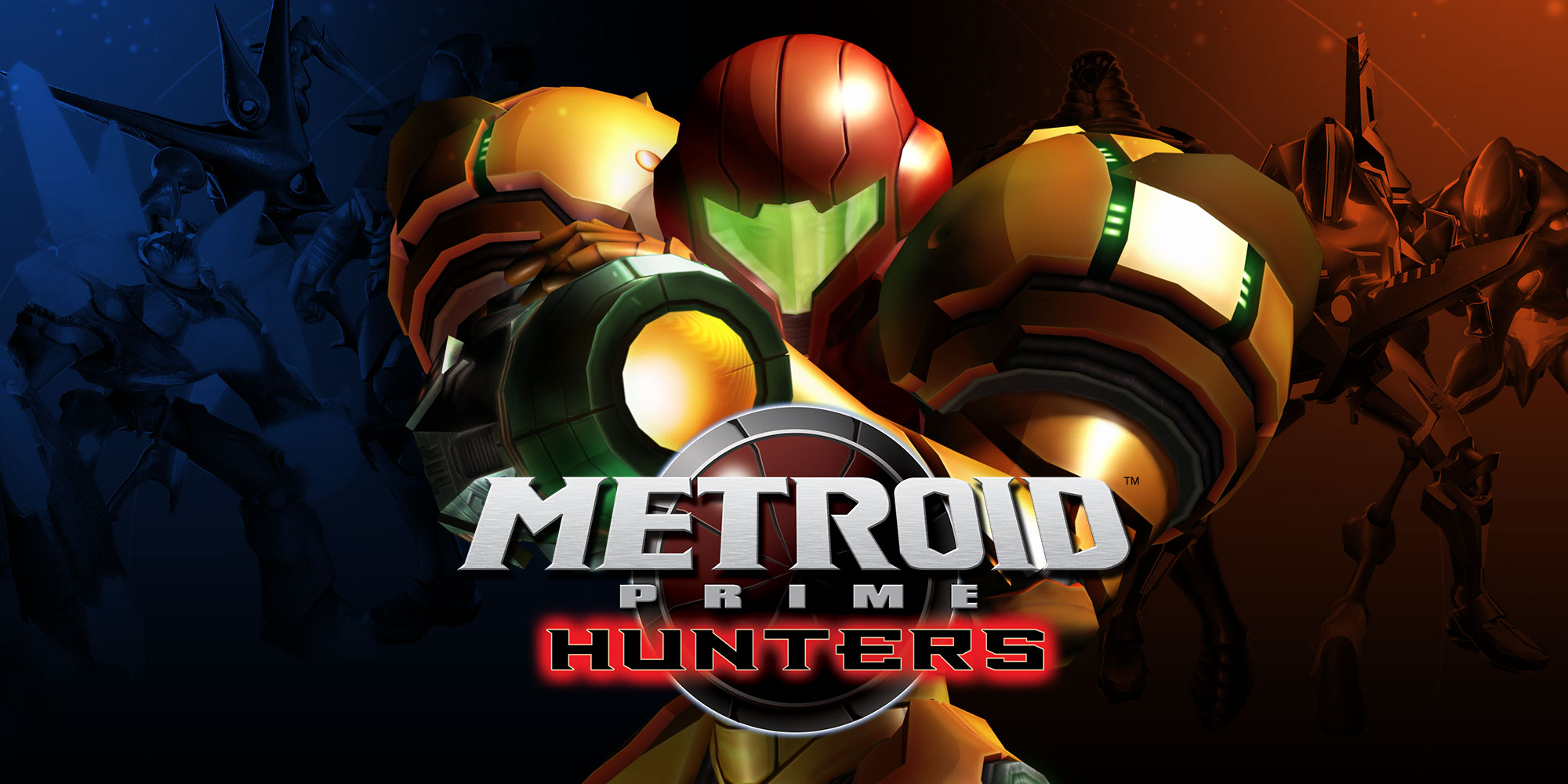
12. Metroid Prime Hunters
I must confess again that this was one of the few titles I never played, but judging from what I've seen and heard about it, it doesn't sound like I missed much. I already wasn't much of a fan of the Prime series in general, and the limitations of the DS hardware made this one seem like it strained itself to get the formula working on mobile. The controls are weird and the campaign seems rather unmemorable; though I heard the sole reason Hunters was actually worth playing was for the multiplayer, but seeing as that's probably pretty dead at this point too, that doesn't leave us with much value remaining in this game.
11. Metroid Prime 2: Echoes
You probably thought I was joking in my opening paragraph, but spicy take incoming my friends; brace yourself: The Metroid Prime trilogy as a whole isn't as great as many of the fans may remember it. I think its insistence on a first person perspective has forced the gameplay to be compromised in several critical ways, and its issues are further exacerbated in this title for implementing some of the worst design decisions of the entire trilogy; inflated health enemies that take forever to kill and lock you into a room so you're forced to fight them, limited ammo beams that deplete quickly but are required for progression so you just avoid using them when you otherwise want to, convoluted level design that forces you to constantly reference your map because you have no idea where you're going, and much of this is made worse by the fact that so many of the environments are over-saturated with a bland brownish color palette, or violet purple when you enter the dark realm. That's it. Those are the only two colors you'll ever see.
It all just starts to blend together after a while; further adding to the general confusion of where you're going because everything looks the same. Imagine the Chozo Ruins from the first Metroid Prime except it's the entire game.
Then to top it all off, you still have to nauseatingly collect all of those damn keys at the end with vague clues offered as to where to find them. I don't know how I managed to finish this one, folks. It took every ounce of my patience to do it. But I did it for the love of Metroid nonetheless. Just don't ever ask me to do it again.
Many of this game's concepts sounded cool on paper. The light and dark realms, the two races battling for dominance over the world, Dark Samus, and so forth. But after the initial intrigue wears off from the first couple hours of gameplay, it went downhill real fast for me.
10. Metroid Prime Pinball
OK... I didn't actually play this one either. Jeez Rotty, have you played any of them?! Shut up OK, this is my god damn list and if I wanna put games on it that I never even played I will fucking do it, bitch. Question me one more time and I will turn you into a god damn cupcake.
Erhmm, anyways, while I can't say I've technically played this game before, I have certainly played many variants of pinball in the past, so it doesn't take much to extrapolate where I would likely rank it. It's shallow, but nonetheless harmless fun, which is more than I can say for any of the previous titles on this list thus far, so it earns its 10th place rank by default. Plus, it was pretty cool and creative to have the pinballs shaped like morph balls. Nothing wrong with a pinball game themed around Metroid. It's just inherently limited by its lack of ambition.
9. Metroid II: Return of Samus
Hey! I can actually shoot more than 5 feet in front of me now! I don't have to fear walking through doors anymore! Metroid can crouch! The game obviously learned some lessons from its predecessor; though at this stage in the franchise there was still a lot of work to be done before I would call it great.
There was still no map to be found, and to make matters worse, the Game Boy's limited hardware meant that the game didn't even render in color, so good luck remembering where the hell you're going again. The Game Boy Color later helped alleviate this issue somewhat, but at its core the game was still fairly repetitive; focusing on Samus' journey to the metroids' homeworld to exterminate them once and for all. Because of this, the vast majority of boss encounters were just recycled skirmishes with metroids in various stages of metamorphosis.
There wasn't a whole lot of variety here, but the level design definitely felt more dynamic and interesting than the first game, with not so many long and tedious shafts to climb. And although it could still be a ruthless game like its predecessor, the quality of life improvements made it feel more like it was on you when you messed up, and not that the game was just being cheap and janky. This aspect gave it an almost survival horror-esque atmosphere in some ways, which worked to its favor.
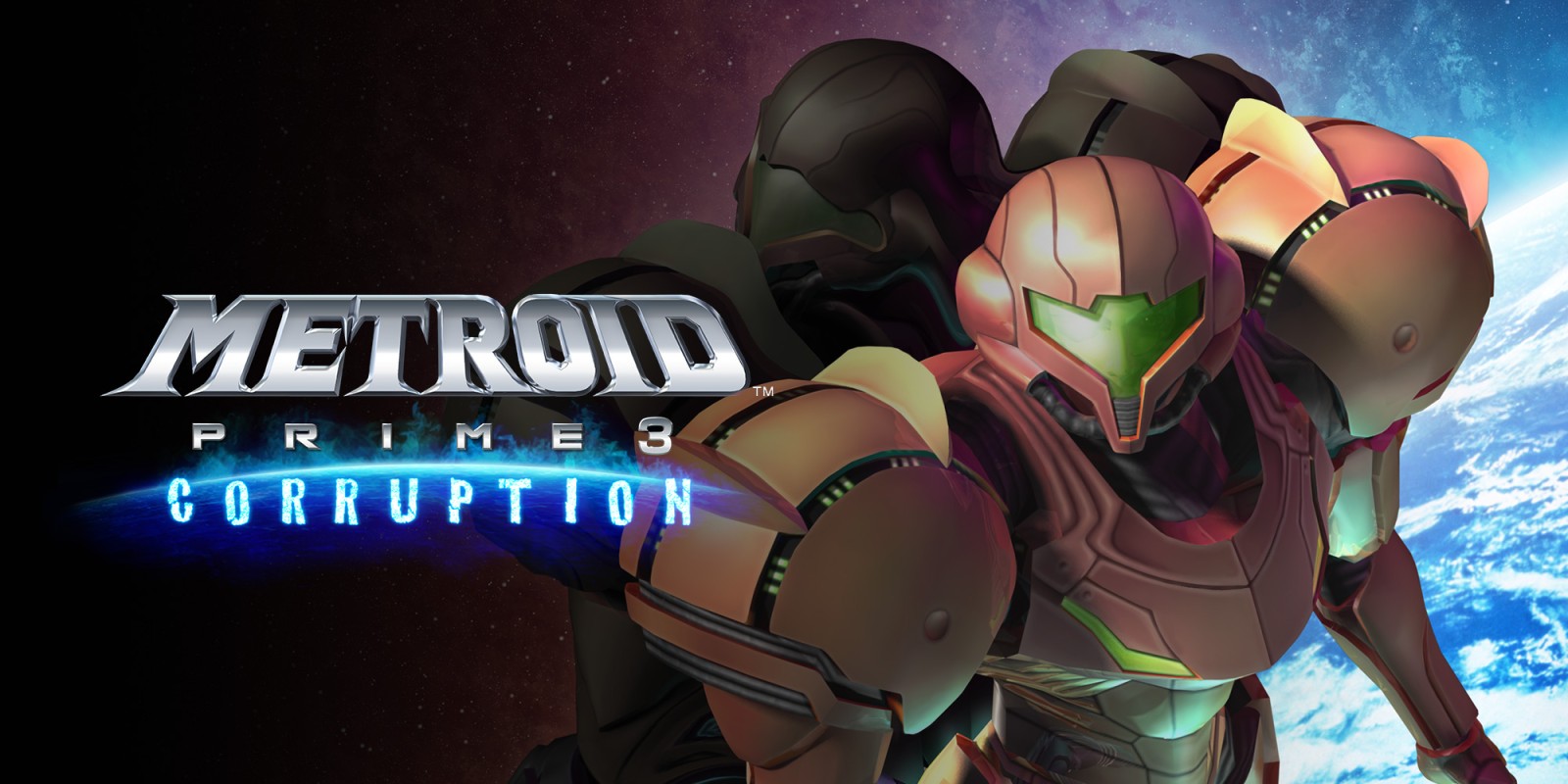
8. Metroid Prime 3: Corruption
As much as I want to rank this game higher due to how much I appreciate its improvements to the Prime formula, unfortunately it still suffers from many of the same trappings that I dislike about this trilogy; namely the slow pacing, lackluster platforming, tedious scanning, and convoluted room-spanning puzzles are all still prevalent issues here which grind the gameplay momentum to a halt. However, it definitely boasts some impressive reworked mechanics to make use of the new Wii motion controls, and I think it's made all the better for it. This is one of the few Wii games that I felt genuinely enhanced the experience by utilizing motion controls, and I actually prefer them to the original controls.
The shooting felt a little too "basic" in the previous games, so adding an emphasis on aiming to the mix brings a much-needed layer of skill to the combat. The new grapple ability was satisfying too; allowing you to yank shields off of enemies so you could expose their weak points.
I can see where some would say the other motion control elements like operating access panels and pressing buttons in Samus' ship were gimmicky, but I would disagree. To shamelessly use the meme, it really makes you feel like you're Samus Aran, and being able to see all the different buttons and gizmos in Samus' ship was a really cool touch. 7/10 -IGN.
The art design of Prime 3 addresses my previous gripes with Echoes. The environments have much more diverse and unique designs, and aren't annoyingly complicated to navigate. Though it does go perhaps a bit too far in the opposite direction; making the planets a little too linear in structure. Key collecting was finally fixed too, only requiring you to collect some but not all of them, and you will likely find enough to progress to the final area just by playing through the other content naturally anyway.
Corruption's quality of life improvements and motion control enhancements really helped breathe some new life into the Prime formula which was already overstaying its welcome for me, and for that, it just barely manages to justify its existence.
7. Metroid: Samus Returns
Some people describe this as Metroid's "return to form" after apparent missteps on the part of Other M and Federation Force, and while it's definitely not a bad game by any means, I found it to be the weakest of the post-Super Metroid sidescrollers where the formula has been thoroughly refined. To its credit though, I felt it also boasted some of the most unique and refreshing new mechanics to the series in quite some time, as it did seem like previous entries were starting to rely too much on the same old tricks with a slightly different coat of paint. This game actually gave Samus some genuinely all-new abilities without making it feel too wildly different from the Metroid that you know.
Its main shortcoming comes in when you examine its level design, which suffered somewhat from Metroid Prime 2 syndrome; there's just so much damn brown. Brown caverns everywhere. The lack of diversity in its environments really takes a toll after a while, and many zones just felt unnecessarily large and labyrinthine with not much in the way of actually interesting things to do in them.
There's a few other nitpicks I have too, like Samus' power suit redesign could have been better, fuck that obnoxiously long robot boss fight, the Ridley showdown was unneeded fanservice, and being a remake of Metroid 2, it still suffers a little from the repetition of all the metroid encounters, but nonetheless it was still a solid package overall, and I was happy to see Samus finally get some fun new abilities that really shake up the gameplay. Though it doesn't surpass the fan remake of Metroid 2, it takes a significantly different approach that makes it still worth playing regardless. For the love of the Chozo though, no more remakes. We need new experiences going forward with the franchise.
6. Metroid Other M
Ahh Other M, how misunderstood you are. Though initially fairly well received by critics on release, it didn't take long for a rather ferocious backlash to form around it from the fanbase. And to be honest, I can understand the criticisms. I just think they are grossly overstated.
Other M is probably the most story-heavy Metroid game to date, and its characterization of Samus is rather problematic. She comes off as moody, indignant, and childish, while at the same time alarmingly subservient to Adam in a way that feels like she's lost her sense of agency, and to top it all off, she has a complete mental meltdown when she encounters Ridley which makes no sense in the context of where the story is at. Gone is Samus' stoic, confident demeanor that shows she's a bounty hunter that knows what she is doing. I've seen entire 30+ minute long videos railing on the failings of Other M because of its storytelling.
There's just one problem with all this. Outside of Fusion, Metroid traditionally hasn't been a series that hinges on its narrative to be good. Sure you can scan and read about all sorts of stuff in the Prime games, but it's all optional content that isn't integral to your enjoyment of them. Once you take a step back and look at Other M as a whole, the gameplay is perfectly fine.
Hell, even the voice acting and dialogue outside of Samus' stiff delivery is fairly adequate. It's largely just a Fusion retread in terms of setting, but with speedier controls that feel more fast-paced and punchy like Zero Mission. As the first 3D Metroid to finally break away from Prime's first person perspective, the gains to Samus' nimbleness are immediately apparent. She's much more agile and fluid to control, and she even gets some flashy melee takedown moves that feel pretty good to pull off.
It's just unfortunate that Sakamoto insisted on a simpler control setup that didn't allow for the nunchuck attachment, as it once again forced some unnecessary compromises. But overall the end result is a game that still feels much closer to the sidescrollers with respect to its gameplay, and for that I can be very forgiving of it.
Plus, visually speaking Other M surprisingly holds up very well. In my replay of it in Dolphin, just upscaling the game's display resolution to HD with no custom texture packs or remastering beyond that makes the game look like it could have easily passed for an Xbox 360 or Switch title. Trailers for this game didn't do it justice in showing off how visually excellent it could look in action. The fact that it runs at 60 FPS natively on Wii on top of that is pretty impressive.
To be honest, one of the real disappointments of Other M that isn't talked about much is its soundtrack. It's just so ambient to the point of being practically inaudible. There's really nothing memorable about it, and having a forgettable soundtrack is not typically something you would attribute to a Metroid game.
Does Other M make some missteps? Yep, it's definitely got its fair share of issues, but at its core, it's a decently fun Metroid experience that offers more environmental variety and cool set pieces than Samus Returns did, and without the constraints of Prime's first person perspective. That's the truth folks; don't shoot the messenger.
5. Metroid Prime
As the first Metroid game to make its foray into 3D from an unknown developer at the time, Metroid Prime made a pretty ballsy move; one that would inevitably alter the course of history for the franchise. Retro Studios of course decided to go first person. Fans were alarmed at the time, but after the game hit store shelves and all the dust settled, most came around to thoroughly appreciating the game that was crafted.
I was not one of those fans.
My journey with Metroid Prime has been a weird one. I never quite got over that first person perspective, and for the longest time I could never entirely put my finger on why. At first I was just disappointed that Samus has such a cool power suit yet you don't even get to bask in its presence most of the time, but eventually it dawned on me that it goes much deeper than that. After all, I frankly didn't care for the fusion suit design in 2002's Metroid Fusion either, but I still found myself disregarding this as an irrelevant nitpick because the gameplay was still great at the end of the day.
The reality is, the change in perspective forced all of the traditional Metroid mechanics to be reforged and reshaped around it, regardless of whether it actually works or not. So much so that some classic abilities like the speed booster, space jump, and screw attack were just flat out dropped, and even when they found a way to rework these abilities in later entries, the implementation was considerably clunkier than it was in the sidescrollers. Samus just feels sluggish to control overall, and it's a problem that the Prime trilogy never truly managed to escape.
The thing about first person shooters is, the emphasis on aiming and gunplay makes up for the lack of mobility and control options that you usually have more flexibility with in third person. But the problem with Prime is that its "gunplay" to the extent that it has such a thing doesn't really feel all that good. You have a very limited set of weapons and it's a single stick shooter, so there isn't really much aiming involved. You just face the general direction of your target, lock on and fire away. Halo: Combat Evolved this is not. But that's fine. Metroid isn't trying to be Halo, right? Right... so why are we in first person again? Because now we just sacrificed one of the key elements of a good Metroid game--satisfying platforming and mobility mechanics--and for what? Some minor gains to immersion? We now neither have the good gunplay of a first person shooter nor the quality platforming of the sidescrollers. In my view, this just wasn't worth the trade-off.
Outside of this rather large and glaring fundamental issue with the gameplay though, Metroid Prime almost entirely borrows from the template laid out by Super Metroid; practically beat-for-beat. You start out on a derelict space station, have a brief encounter with Ridley, and then rush to evacuate just in time to land on the nearby planet and investigate those shady space pirates. Once there, you are treated to an utterly engrossing and atmospheric world ripe for exploration; with an attention to detail and quality soundtrack that all lives up to the Metroid name.
It's an effective formula, and it really is a testament to the quality of Super Metroid's design that despite my major gripes with the core mechanics of this game, I still found equally many things to appreciate about it. The world of Tallon IV goes a long way toward saving Prime from its shortcomings. It certainly nailed the atmosphere and exploration aspect of Metroid.
But at the end of the day, I think there's no getting around the fact that this is really just Super Metroid with inferior mechanics, pacing issues, and tedious key-collecting filler at the end, which leaves me feeling somewhat unsatisfied, despite that it is a technically functional and competently-made game. I mean if you're just going to do Super Metroid again, at least do it like Zero Mission and refine rather than regress the core gameplay.
As you can see, I have an endless love-hate struggle with this game. On the one hand, it put a beloved IP back on the map and ushered in a new Metroid renaissance of sorts, yet on the other, I cannot escape the feeling that it has held the franchise back by forever coloring everyone with a bias that this is all a 3D Metroid game can be and nothing more, and for me, I still just see so much more potential in it. I think we can have a 3D Metroid that has all the shiny bells and whistles of a AAA production but without sacrificing the quality gameplay of the 2D classics. For now, I will have to continue to wait for that day that such potential can be realized. As for Metroid Prime, faaaaaaaaaaaaawwck. How am I supposed to rank this? I'm giving it 5th place out of charity for the fans. But that's the highest I'll concede to you, filthy secondaries.
4. Metroid Zero Mission
At the time of Zero Mission's release, this game existed in a bit of a strange place. Ostensibly it was a remake of the original Metroid for NES, but Super Metroid already served as a sort of "soft remake" of it to begin with; having Samus return to planet Zebes to once again battle classic villains like Kraid, Ridley and Mother Brain in many of the same locales found in the first game while also expanding the world with new zones and possibilities that weren't limited by the old 8-bit hardware, so what purpose does it really serve to go back and redo Metroid once again?
Well as it turns out, this game manages to somehow walk that fine line of balance where it doesn't eclipse Super Metroid but does introduce some nicely reworked mechanics coupled with a few surprises along the way that really make it stand on its own. The main thing is, Zero Mission just feels incredibly good to play. Controlling Samus is a breeze. She can hop, flip, grip and climb over virtually any obstacle with effortless fluidity, and the power grip added from Fusion was further refined to allow Samus to aim and shoot while hanging from ledges. Zero Mission practically makes you feel like a speedrunner even when you're not trying to speedrun the game.
The level design still features a lot of verticality much like the original map of Zebes, but without feeling nearly as repetitious, and the soundtrack faithfully recreates many of the same classic tunes. Just when you think Zero Mission's shown all of its cards though, it pulls the rug out from under you as Samus is suddenly shot down by space pirates and temporarily loses her power suit. For the first time ever, we got to control Samus in her zero suit and navigate through an incredibly creative and fun stealth section. Sneaking past space pirates and stunning them at the right moments with your pistol while scrambling for hiding spots actually worked quite well within the Metroid formula. And yes, Metroid could officially crawl now. At least briefly.
I only have nitpicks to offer against this game. It's fairly short, the objective hints are a little too hand-holdy, it's not as richly-detailed as Super Metroid, and its brighter color palette along with its slightly more "upbeat" soundtrack prevents it from reaching the same levels of atmosphere and sci-fi horror moodiness that I prefer from the best Metroid games, but its gameplay just feels so good at the end of the day that most of this is a wash.
Zero Mission was criminally overlooked when it came out; barely managing to etch out 500,000 units worldwide after a year on the market. I suspect it was at least partially because Nintendo didn't put much effort into advertising it. I'm pretty sure the way I came across this game was when I was just browsing the aisles in Best Buy one day and spotted Metroid among the shelves, proceeded to shit bricks, and then immediately headed down to the checkout counter with it. Like what the hell man? This should never be the way that you find out about a Metroid game, especially one as great as this.
3. Metroid Fusion
Eight years after Super Metroid came out, waiting for this game felt like an eternity for me. I found it strange that Nintendo was always churning out sequels for all its other franchises--including Star Fox and F-Zero in the interim--while Metroid languished in obscurity outside of Samus' brief cameos in Smash. Then Nintendo randomly dropped two giant bombshells in the form of Metroid Fusion and Metroid Prime just days apart from each other. Though Prime mostly soaked up all the attention in the limelight, Fusion was the real MVP up in this bitch. Developed by Nintendo team R&D1; the same team behind the legend that is Super Metroid, Fusion seemingly came out of left field with its radical redesign of Samus' power suit and completely new setting, as well as an all-new threat that rivals the metroids in the ferocity and danger that they pose.
The X parasite was a really cool concept. At first glance they're a seemingly harmless floating amoeba-like blob, but they possess one absolutely terrifying trait. They're a parasitic organism that consumes and then copies the appearance of their host lifeform. Once the transformation is complete, they then multiply rapidly and asexually. The worst part of it all? Samus got infected by one. Nearly claiming her life, she barely managed to survive when a last-minute cure was discovered using metroid DNA. But the danger was far from over after that. The experience completely altered Samus' physical appearance, and much of her armor had to be stripped in order to save her life. Turns out that infected armor still managed to finish copying her, and thus the SA-X was born.
Now stripped of most of her abilities, all Samus could do was frantically run from the fully-powered SA-X that was using her own weapons against her, and the longer she remained ill-equipped to fight it, the more it just multiplied into deadly copies of the bounty hunter. Every time you encountered the SA-X, the game did a fantastic job building a thick sense of dread in the moment; making you scramble to the nearest exit in order to evade the parasite's vicious attacks.
Fusion's emphasis on story was a refreshing change in direction too. I found myself thoroughly appreciating Samus' introspective monologues and the computer AI's interactions with her. Unlike Other M, Fusion does a great job of showing Samus' feelings toward Adam without coming off as some kind of weird daddy complex. This game gave us the best peak into Samus' mind in a way that felt believable and fitting for her character, and to me, this is by far the greatest depiction of Samus I've seen out of any game from the series. Its only shortcoming is that it came at the cost of restricting progression to a significantly more linear structure. If Metroid can find a way to do more storytelling like this while keeping the game world more open-ended, Nintendo would have another masterpiece on their hands.
Fusion, much like Super Metroid, is one of the games that most captures the essence and soul of what a great Metroid game is. It is absolutely dripping with sci-fi horror atmosphere. Its world is mysterious, haunting, and foreboding. You're paranoid of what you might discover around every corner, but the allure of uncovering the space station's secrets is too great for you to ignore.
2. AM2R (Another Metroid 2 Remake)
Some might think that with this being a fan game, it is nonessential and probably lacking in production values and polish, so it couldn't possibly measure up to Nintendo's own remake of Metroid 2. However, they would be committing a terrible mistake in making such assumptions. In fact, if people weren't explicitly told that this was a fan game and it was allowed to release on official Nintendo hardware, most players likely wouldn't even notice that it wasn't actually developed by the big N. More so than that, it's just unequivocally better than the official remake. AM2R's long 10+ year labor of love by the fans is a crowning achievement and testament to the Metroid community's devotion to the series. The developers of this game truly understand Metroid.
If you thought Samus couldn't feel any better to control in Zero Mission, AM2R still somehow manages to refine her controls even further. You're now given a dedicated button for instantly transforming into a morph ball, Samus can draw items to her with the charge beam like seen in the Prime series, there's a walking animation and a running animation depending on how hard you press the joystick, you can lock Samus' direction so she can fire forwards while stepping backwards, and you can enable auto-climbing over small obstacles so Samus wastes no time hurdling over minor breaks in terrain. From a mechanics point of view, this is the best Metroid has ever felt to play. The attention to detail here is insane.
Two of the coolest features added in later updates include fusion mode and the randomizer. Fusion mode is a step above the game's hard difficulty. If you want a Dark Souls-meets-Metroid experience, this mode will give it you with soul-crushing challenge, and it even comes with a fully-animated fusion suit as seen from Metroid Fusion. You can combine this mode with the randomizer as well for a truly harrowing experience, where the game will rearrange all the item locations so you have no idea where you'll find the powerups and abilities that you're looking for. There is nothing more satisfying than when you hit a brick wall with a certain boss, then go foraging for more powerups and come across a lucky beam upgrade or essential tool that gives you a huge leg up against them, and then you return to give the boss a fistful of plasma. It gives the game a completely different vibe that adds tons of replay value.
Unlike MercurySteam's remake, the level design offers much more diversity in environments while having less wasted space. You won't be wandering a bunch of samey-looking caverns trying to find something interesting. One of the more astonishing things about it too is that this game even has set pieces. There's a whole section with an evacuation sequence, an eerie encounter with a blind-but-deadly creature, and a brief cutscene of federation soldiers getting mauled by an omega metroid to name a few. AM2R doesn't cut any corners like you might expect from a game on a $0 budget.
The only thing I kind of wish it had was a few cutscenes done in the style of Zero Mission's just to give it that extra layer of shine, but as it is, AM2R already offers more than enough for a fully-featured package. It's a more faithful remake than Samus Returns; almost to a fault. The game is still inherently limited somewhat by the repetitious template of the original Metroid 2; constantly having to track down and kill numerous metroids, and to MercurySteam's credit, they found some creative ways to experiment with that whereas AM2R decided to play it more safe. But the end result is still one hell of a game, and with so many modes and customization options, it is far and away the most replayable Metroid game to date.
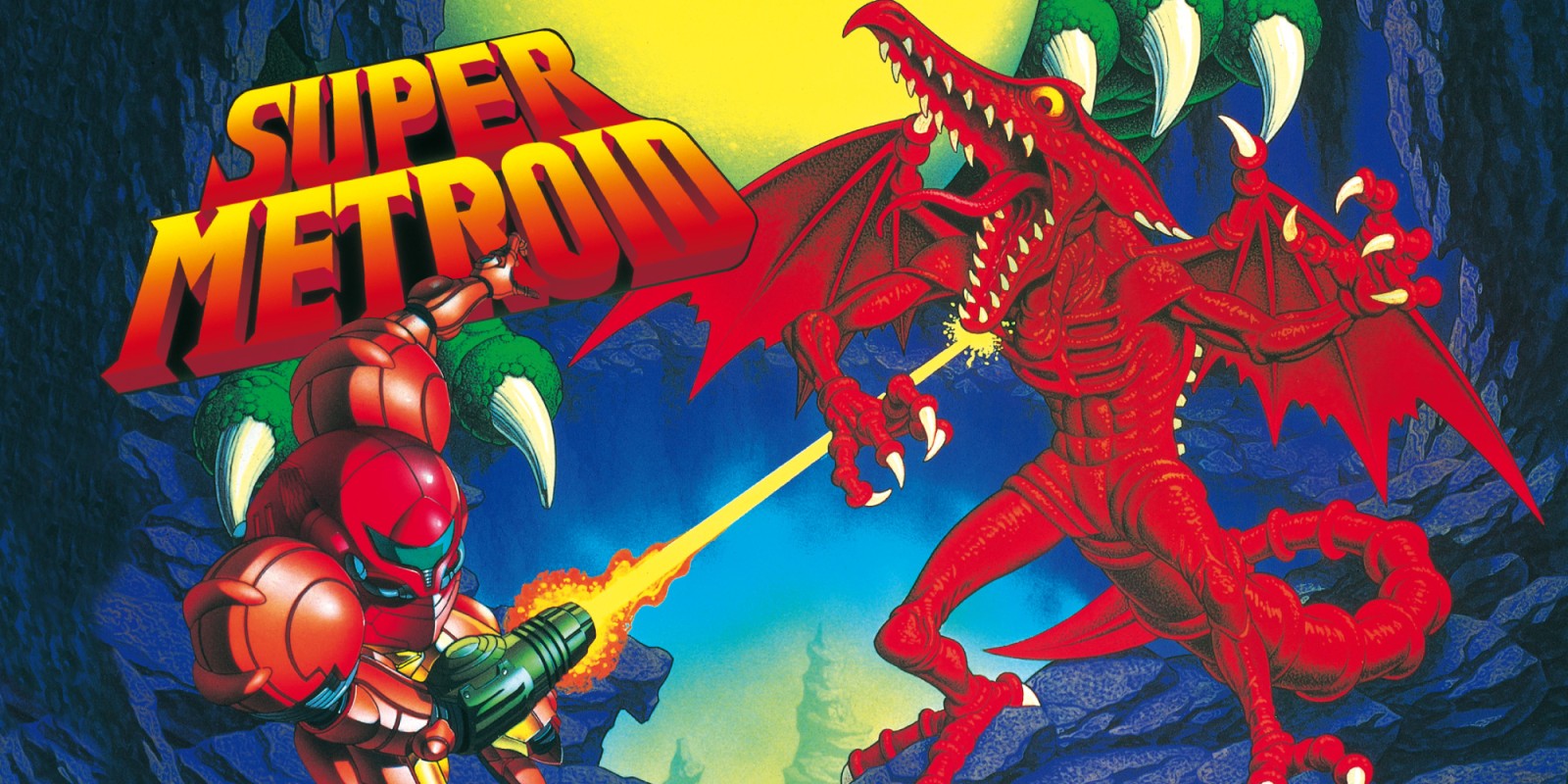
1. Super Metroid
So apparently Nintendo went from making a bad game to producing a middling quality but passable sequel, and then finally to the next natural step of $$$ FUCK IT YEAAHHH TO THE MOON BOYS. GAMESTOP, AMC, AND DOGECOIN COMBINE INTO A VOLTRON MECH OF KICKASS. $$$
The jump in quality from Metroid 2 to Super was so astronomical that it didn't just end up far surpassing its predecessors but it instantly turned itself into the gold standard that every metroidvania has been living in the shadow of ever since, including Metroid's own sequels.
Oddly enough, the game had a troubled development and was almost cancelled by Gunpei Yokoi on multiple occasions. Its release was continually delayed and its budget increasingly grew out of control. Yoshio Sakamoto recalled Gunpei once angrily commenting on the team's obsessive devotion and crazy overtimes with, "Are you lot trying to produce a work of art or something?"
As a matter of fact, they were, and the end result was a masterpiece that even hooked Mr. Yokoi himself after it was finished. Super Metroid was the most expensive game ever made at the time of its release, and it was a budget well-spent. The level design, the soundtrack, the graphics, the atmosphere, the controls; Super had it all.
Right when you first land on Ceres Space Station, the atmosphere is palpable. There's no soundtrack playing when you arrive; it's just the whirring ambience of the station's ventilation systems that you hear in the background amidst a cold, quiet, and eerily lifeless backdrop. As you wander the station, every room is deathly silent and devoid of life. Finally, you stumble upon the corpses of research scientists alongside shattered glass where the larval metroid was supposed to be; an ominous sign of events to come. What follows in the next room is an iconic moment that's been forever baked into my mind.
The metroid larva sits peacefully in a jar at the other side of the room. The background is pitch black, and even the sound of the ventilation has now stopped. All you hear is the occasional chirps from the baby metroid. You can walk over to it, but nothing happens. Several seconds pass and it seems like there's nothing to do here; whatever ravaged this place before must have already come and gone, but then suddenly an orange set of eyes pierces through the darkness. Firing at it has no effect, until Ridley finally reveals himself fully, roaring as he grips the metroid in-hand. The iconic boss music kicks in with full force, and an intense battle breaks out. The whole sequence is just incredibly cinematic, in a time when describing any video game as "cinematic" wasn't really a thing.
Something particularly notable about this game is how almost every background and environment is so animated. There are glowing lights, pulsating flora, rain effects, mist and fog effects, plant pedals that gradually fall to the ground, and heat wave distortions in hot zones. Did I mention this was a Super Nintendo game? How the hell did they cram all that shit in there? Anyway, there's always something of interest to look at. Super may no longer be the best that the series has to offer mechanically, but its world is just so well-crafted that this criticism barely registers as a footnote, and in some ways its unique "floaty" feel compared to its contemporaries only adds to the sense of immersion that you're exploring a truly alien planet.
Ideally, this is a game best played when you're as young as possible, but not necessarily for the reasons you might think. I was fortunate that I had the opportunity to experience it when I was just a kid in the single digits. There's something about the way your brain works when you're young; your mind is so full of imagination, and when combined with playing a game like Super Metroid which emphasizes and rewards exploration so much while inside of a richly-detailed world, the ideas in your head go completely wild at the possibilities of what you might discover behind each locked door or hidden passageway. It's a feeling you just can't replicate as a more jaded adult.
More than 20 years after its release, I'm still discovering new secrets about the game. Even without the benefits of nostalgia or youth though, Super Metroid is still an amazing classic that stands the test of time.
Metroid Dread Bonus Commentary Special
Believe it or not, I actually started writing this blog days before Metroid Dread's announcement. I didn't time this to coincide with the Metroid hype cycle, but now that I guess it's here, I should probably make mention of it! With the initial trailers and treehouse demos now out, Dread is shaping up to be a great-looking game. I was initially skeptical of the new suit design, but it kept growing on me over time, and now it's quickly elevated itself to my second-favorite suit behind only Samus' classic varia suit itself.
Newcomers should realize just how insane this announcement was. Metroid Dread is like the equivalent of Half-Life 3 for Metroid fans; none of us ever thought it was going to come out. The title and concept have been rumored for more than 15 years. It was a myth-come-true. But it's real, and it's finally here.
The gameplay is looking really interesting. As both a sequel to Metroid Fusion and a game being developed by the studio behind Samus Returns, it appears to be combining and expanding upon the mechanics of both. Of most interest to me is the new successor to the SA-X; the EMMI machines. After finishing Fusion and Zero Mission, I had conceptualized an idea in my head of how cool it would be to have an entire metroidvania centered around this unstoppable threat that can randomly show up and force you to take cover or run, instead of only during select semi-scripted segments as seen in Fusion. It appears Sakamoto was clearly thinking the same thing, so now the madman went ahead and actually did it. I'm really excited to see what they came up with.
My one small worry is that despite all the video demos for it looking pretty good for the most part, this is still MercurySteam developing it. I enjoyed Samus Returns for what it was, but I still expected much more from a 2D Metroid than the game we got. I hope now that the team has had a foundation to build upon with the 3DS title, they can deliver us a much more polished experience going forward, but time will tell.
Double-Bonus Commentary: What order should you play the games?
Oh you thought I was done, did you? I'm sorry, but I just can't shut up about Metroid. Since Dread is now just on the horizon, more than likely many people might be wondering what's the best way to approach the series before the game's release?
Well, that can largely depend on how much time and effort you're willing to commit. If you only have a fleeting interest in the series and are unsure of whether you want invest in it, then just play Super Metroid. It's a classic that's simply too essential to skip.
If you're fairly certain you're going to be playing Dread but don't have time to play all the old stuff, then just play Metroid Fusion. With Dread being a direct sequel to Fusion, it will be more than enough to get you up to speed on the main plot and hopefully get you even more pumped to dive into Dread. The nice thing about all these games is the intros do a pretty good job of recapping the story so far, so you generally won't get lost no matter where you start from.
But if you really want to do things right, probably the best way is to play the core Metroid titles in chronological order of events. That being said, the first two Metroid games for NES and Game Boy have not aged all that well and would not be recommended as starting points. Thankfully as also covered above, we have really good alternatives. So here is the ideal recommended play order:
Metroid Zero Mission -> AM2R -> Super Metroid -> Metroid Fusion
This play order is an excellent choice for two-fold reasons. Firstly, all four of these games are rendered in timeless Super Nintendo-style 16-bit graphics, so there is a certain sense of consistency in playing them all this way. Second, the progression of these games just so happens to work out that each successive title holds your hand less as you get better at them. With Zero Mission, it will point out your objectives directly so you know exactly where you need to go; helping you ease your way into the series. Then AM2R stops giving you directions, but the map layout is intuitive enough that you can pretty easily figure where you need to go even without the game spelling it out for you, and then finally you get to Super Metroid where all the training wheels come off and you'll sometimes need to pay close attention to your surroundings to make note of areas you couldn't reach before so that you can come back later with the right equipment. It really works out well in gradually training you for the harder stuff... At least until you get to Fusion, and then it's back to hand-holding again, but it has its reasons for doing so.
There's a few caveats to this play order though. For one, there is a minor regression in mechanics moving from Zero Mission and AM2R to Super and Fusion, which might be a little off-putting to someone who's already thoroughly gotten used to the style of controls from the first two games. I don't think the regression is all that noteworthy, but nonetheless it is an issue that could affect some. In such cases, it might be better to play Super and Fusion first, and treat Zero Mission and AM2R more like prequels so your expectations are properly grounded. This is a perfectly fine way to play too, as like I said earlier, these games do a generally good job of recapping the plot regardless, so you have some flexibility here. The only issue with this approach is that you're dumping yourself right off in the deep end of the pool by starting with Super, but if you're up for the challenge, go for it.
Another issue is getting your hands on all these games can be a headache if you don't know where to look. Unfortunately there's no convenient Switch collection to just snag them all on. Thankfully, I can point you in the right directions.
Super Metroid is the easiest to obtain. You can play it through the Switch Online app. It is offered as part of the subscription which grants you access to the classic SNES library.
Zero Mission and Fusion are a bit trickier, being that they are GBA titles. You can try to obtain them on original hardware if you can somehow evade the scalpers, but they're also available on the Wii U virtual console for around $8 a piece. Otherwise your only other alternative is emulation.
Finally, there's AM2R. Thanks to DMCA shenanigans from Nintendo, finding a properly up-to-date version of this game online is more of a pain than it should be, and the updates really are essential. You can head over to the AM2R subreddit and there are threads there that can hook you up with a launcher and updater which can get you what you need, but you'll also still need to do hunting on your own to find a copy of the game itself. Though if it seems like too much hassle, playing the 3DS remake Samus Returns is a serviceable substitute.
Once you're done with all that, feel free to branch out and go crazy! You may be ready for Dread, but there's always more Metroid to be playing, and someone needs to keep those space pirates in line.
Triple-Bonus Extra Special Something-Something Commentary
Following controversy surrounding Kallie Plagge's 7/10 GameSpot review of Cyberpunk 2077, GameSpot has unveiled that a new adaptive AI scoring and review system is in development to accommodate all types of viewpoints.
"We found that in this modern age our audience has set the bar so high
that it is an impossible standard for any human critic to meet," a
GameSpot representative said. "Had we scored the game higher, players
would have been angry that we misled them into purchasing a
fundamentally broken game at release. Yet going with the lower score
that we did also resulted in our audience being frustrated that our
score didn't match their expectations for the game before they had a
chance to play it for themselves; creating a backlash to the review
regardless."
TER: "So how does this new review system work?"
GameSpot: "Now with our new review system, an AI
algorithm intelligently scans the comments of every GameSpot account and
develops a predictive model of their behavior. Most notably, it
calculates a value that we refer to as the Butthurt Index. If their
Butthurt Index exceeds a certain threshold, the algorithm will take into
account the sensitivities of the reader and adjust review scores
automatically according to their interests. It will even scrub the
review of trigger words like 'inclusive' or 'culture', and alter entire
paragraphs as necessary to match the reader's sensibilities."
TER: "Wow that sounds quite advanced. But how do you solve the problem of popular opinion changing within days of the game's release?"
GameSpot: "That's the beauty of our adaptive algorithm.
It will also dynamically update the score of the game in real-time as
it follows trending opinions online and adjusts the score accordingly;
ensuring that no matter what, GameSpot's score will always agree with
you, even if you completely shifted your perspective before and after
playing the game, or if you changed your mind five minutes ago.
GameSpot's Smart Review system will always be one step ahead of you, so
you can be sure your viewpoint will always be validated and you'll never
have to worry about tripping over your own contradictory opinions;
because we agree with those too... Somehow."
TER: "Don't you think that's kind of pandering and dishonest, and reflects poorly on gaming as an art form?"
GameSpot: "Not at all. This is merely realigning ourselves to the new post-truth era. We can disagree with that criticism without providing an argument, and just keep saying this was our score all along, thus becoming indistinguishable from the truth."
TER: "..."
[DISCLAIMER: The Error Report is a fictional publication produced for fun and not a real news source... or is it?]
Genshin Impact is a fun little game that I've been spending a great deal of time with these past few days. It's full of charming visuals and characters, with some great art direction that merges Breath of the Wild with traditional anime aesthetics in a way that makes it really stand out. On top of this, it has a flashy combat system that rewards frequently swapping through characters in your party to chain together devastating combos, which feel quite satisfying when you manage to pull them off. Even more astonishingly, it's all offered for free in a package that feels like it could have gotten away with a $60 price tag.
There's a lot to like about this game, but nonetheless I can't help but feel underneath all its charm and value, it belies a bad omen on the horizon. This is a single player game that ostensibly should have no reason to be tied to an always online connection if it weren't for the arbitrary gacha elements and F2P mechanics sprinkled in. For that reason alone, I don't want to see more games like it in the future. At least, not with this monetization model, but do keep the waifus and the charming BOTW visuals. :3
"Gacha" for those who are unfamiliar, is a microtransaction model that essentially functions like loot boxes. You spend a certain amount of currency, and in exchange you get to "pull" the proverbial in-game lever, which doles out randomized loot in the form of items, characters or other prizes.
No doubt being one of the first of its kind; a single player story-driven game with AAA production values running on a free-to-play model; I'm sure other publishers are watching it closely and already salivating at the prospects of copying it. Within its first couple of weeks since launch, it's already been reported that the game has garnered over 17 million downloads, and analysts have been projecting that it's on track to gross more than $100 million by the end of its first month. The issue here is not that the game is merely making a lot of money of course, but rather how it is making that money which is the problem. On the surface, there's nothing wrong with a great game being rewarded with financial returns; it's the implications and precedents it sets which are cause for concern.
While my time with the game so far has been mercifully generous and the
gacha elements have been relatively unobtrusive, there is an undeniable
reality that they impact the gameplay in various subtle ways. For
instance, in a more traditional single player game, characters would be
introduced naturally throughout the story and join your party when the
narrative calls for it. But in Genshin Impact, acquiring
characters is a central allure of its gacha mechanics. Most of its
characters outside of the initial four that you pick up are locked
behind gacha pulls, and are only accessible when you manage to get
lucky.
This makes their implementation into the story somewhat clunky, as some
characters you'll unlock long before they become relevant in the story;
awkwardly remaining silent along the journey without any proper
introduction, dialogue, or character development, while others you'll be
introduced to and interacting with quite a bit but are unplayable
regardless because you didn't pull the right slot machine yet. It's a
curious design that only exists in the way that it does to serve the
gacha pipeline.
Imagine if Mass Effect 2's character recruitment revolved around this same mechanic. If you unlocked Garrus Vakarian before doing his intended introductory mission, it would ruin the surprise and big reveal of Garrus' return from the first game. Now of course, you could argue that Genshin Impact's story is written to accommodate its own gameplay system, so such problems like this would never arise, but that's precisely the issue. You inherently limit the kind of storytelling you can do in order to accommodate for gacha.
How do you handle a dramatic character death in service of the story? What about if the characters need to be separated for a period of time due to some calamitous event? The fact of the matter is, I already know that none of these characters I've been unlocking are in any real danger relative to this story; no matter how much they try and play up the impending doom of Stormterror or the vengeful wrath of some god. You're never going to have that jaw-dropping Aeris death scene because if somebody poured a lot of money into unlocking that character, they damn well better expect to be able to play them whenever they want.
Further, most traditional single player games tend to only use a single unified currency to drive the item economy, making it easy to judge the value of items and prices because you only have to compare them all against one thing. But once again in Genshin Impact, seemingly every conceivable item is tied to a different currency, which can sometimes be exchanged with multiple other different kinds of currencies if you don't have enough of the one you need, and it all quickly becomes a sprawling and confusing mess to follow; no doubt I'm sure to bamboozle customers into just paying real money to get things without thinking too hard about whether they got value for their buck.
Even the combat system I suspect has been affected in some way by this model; not just in terms of stats and progression, but also down to things like the lack of a lock-on targeting system in the controls. Breath of the Wild allows you to target and focus on the enemies that you want, but Genshin attempts to intelligently guess which enemy you're trying to swing at without really giving you the option, and while it is fairly smart at guessing correctly the majority of the time, when enough enemies crowd the screen at once, it can get a little lost, and I feel the only reason it works like this is to simplify the controls so that it would be more accessible on mobile platforms instead of allowing it to be uncompromised as a console and PC exclusive.
Look, I just want to have a rich story and deep gameplay mechanics to go
along with my anime tiddies ladies and gentlemen. I don't think I'm
asking for too much. Because truly I do play these games for the plot as
well. The beeg plot. Bouncy plot. T H I C C plo--wait what was I
talking about again?
But most importantly, my biggest issue is that I don't want to see a
future where a bunch of perfectly fine single player games are still
tied to a ticking time bomb that, even if the gacha implementation is
reasonable, the servers will eventually get shut down when the profits
dry up, making them all eventually lost to history. I would much rather
just pay my $60 up front and be done with it. So with all this in mind, I
haven't given this game a dime of my money so far, and I don't intend
to in the foreseeable future, as I don't want to support this kind of
model, and I encourage others looking into this game to do the same. If
miHoYo were to offer an offline $60 alternative, I would gladly open my
wallet, but that is unlikely to happen any time in the near future.
Unfortunately, with the amount of money Genshin Impact has
likely already generated, my efforts are probably moot at this point
anyway. The AAA publishing scene is one of constant escalation and
pushing boundaries; because it's never enough to just be a sustainable
business model. You always have to be making more money than the year
before, even if such demands are inevitably unrealistic. I can only hope
and pray that when the likes of EA and Activision get wind of this, we
won't be seeing Star Wars Impact: Pull the lever for a 0.05%
chance to unlock Darth Vader. While for the time being the convenience
of a relatively AAA experience for the price of free is quite enticing, I
would gladly trade it away for the long-term benefit of the medium.
Hello, it's your ole pal Siets again, Chief Arbiter of Good Taste.
Recently I've been revisiting Hyrule Warriors, the spinoff Zelda game for Switch. I never previously thought of the Zelda franchise as a particularly notable source for waifus, but Hyrule Warriors
proved to be a treasure trove of them; thanks in part to Koei Tecmo's
own impressive contributions to the harem. Whoever was the character
designer for this game truly deserves a medal, but I digress. Let us
continue our scientific endeavors to sequentially rank random things.
- F Tier -
Medli
What's up with that duck nose? I didn't authorize this as part of my
genetically engineered monster girl experiments. My research is strictly
ethical, and we're not trying to create duck girls. I'm shutting this
lab down.
- D Tier -
Toon Zelda
Only pro Smash players would pick her as Best Girl.
Tetra
Can she even drink rum? What kind of pirate can't drink rum? I mean, I guess Tetra is
a pirate and she spends a great deal of time roaming international
waters, so I dunno what all the laws are on that and maybe she doesn't
care anywa--you know what? I'm not going down this rabbit hole. D tier.
Sheik
WHO COULD THIS BE???? I dunno, but she's going into D tier.
- C Tier -
Ghirahim
Not technically a waifu, but hot damn with a pose like that, the ladies could sure take a few pointers from him.
Agitha
Agitha's weird obsession with bug collecting is both cute and kinda creepy so I dunno how to feel about it. C tier I guess.
- B Tier -
Midna
Midna's got a S tier personality, but trapped in a D tier form. Sorry
folks but the imp butt is overrated. However she still averages out to B
tier.
Zelda
Hyrule Warriors seems to take its inspiration
most heavily from Ocarina of Time, and while that's a perfectly good
foundation to work off of, the princess herself was probably one of its
weaker points to take a cue from. She's just kinda boring and stoic,
though she is still a bit of a QT at the end of the day so uwu I'm
bumping her up to B tier.
Fi
Everybody always hates on Fi but she's like Data from Star Trek
except female. Data always was beloved, so why does Fi get the cold
shoulder? Y'all are just trying to impose your gender roles onto Fi, and
you're mad because she's smarter than you. Girls can be meticulously
logical and analytical if they feel like it, you sexist bad person. I
dig all the fancy and formal speech in a weirdly-cute robot girl voice.
She can over-explain shit as much as she wants to me.
- A Tier -
Marin
Marin is wholesomeness-incarnate, and she can summon a giant whale to obliterate armies while wielding a big-ass bell as a weapon. Apparently. I don't understand Zelda logic OK but she's big cute and is probably the type of old-fashioned farm girl that enjoys cooking and cleaning for you too, so it's easy to see why she is a fan favorite to many.
Lana
Without Lana there wouldn't be her superior counterpart in Cia, though she is still an adorable little sorceress in her own right. Selfless and charming; she also likes to bounce her butt around like Rottytops so that might have something to do with my totally unbiased ranking here.
Impa
May not be as uwu as the other waifus on the block but god damn is
she a badass. Earns her A tier status on sheer badassery alone. She's
definitely gonna be on top and handcuffing you so you can't escape.
- S Tier -
Cia
I have a thing for waifus with big ambitions; who will bend the world to their will in order to get what they want. The world is frequently a cruel and unforgiving place, and it takes a lot of balls when reality goes against you to still deny it to its face and insist on changing it anyway. And look, Link could have saved Hyrule a lot of trouble and misery if he just obliged her. It's a pretty reasonable ask. She just wants some hylian dick, and with a bust like that, why resist? Link gets cockblocked in every game anyway, so let him have some respite this time. They deserve each other. Zelda doesn't even need to know. I'm sure Cia can just cast some kind of spell to make her OK with it anyway, right? That way she can even join in on the party if she wants to. Everybody wins in the harem ending. I'm just trying to find a nonviolent solution here.
Twili Midna
Now Midna's got the form to match her S tier personality. Midna's a rather unique tsundere in that instead of being embarrassed of her feelings, she's quite good at hiding them most of the time while still getting away with expressing them. She does this by putting on this flirtatious attitude with Link, but in a sort of sarcastic belittling demeanor, yet she's really just fooling herself because she actually does just like him. It's the layered tsundere psychology that makes her truly special. Also monster girl so S tier all around.
Ruto
Much like Cia, Ruto's just a fish that wants to boink you, and that's
a fish I can respect. Right down to business. As one of the few monster
girls among this roster, it's no surprise that she instantly earns her S
tier status. The only waifu on this list that can get away with being
totally naked, while carefully implying the nip with those fin-covered
bosoms. Severely underrated TBH. Needs more lewds of her. But then again
when you're lewd all the time, maybe that makes up for it?
- Best Girl -
Tingle
HAAAAAAAAAAAA no.
- Actual Best Girl -
Linkle
What can I say? She's got a heart of gold and even puts Marin's
wholesomeness to shame. What she lacks in monster girl attributes she
makes up for in sheer spirit. Bursting with enthusiasm and
determination, Linkle is a precious gem and every day that goes by where
Nintendo hasn't declared her canon is further proof we live in the
worst timeline. FIX IT NINTENDO. NOW. REEEEEEEEEE.
As always, my findings are thoroughly peer-reviewed and scientific, so don't be a science-denier kthx. ^_^